Mežaparks was laid out as a garden city in pine forest, and its character comes from the old villas, the generous plots and the mature pines standing between them. The historic setting and its protected status mean the restrictions on work here are stricter than anywhere else in Rīga, and that is the first thing we check.
The pine is the foundation of the neighbourhood
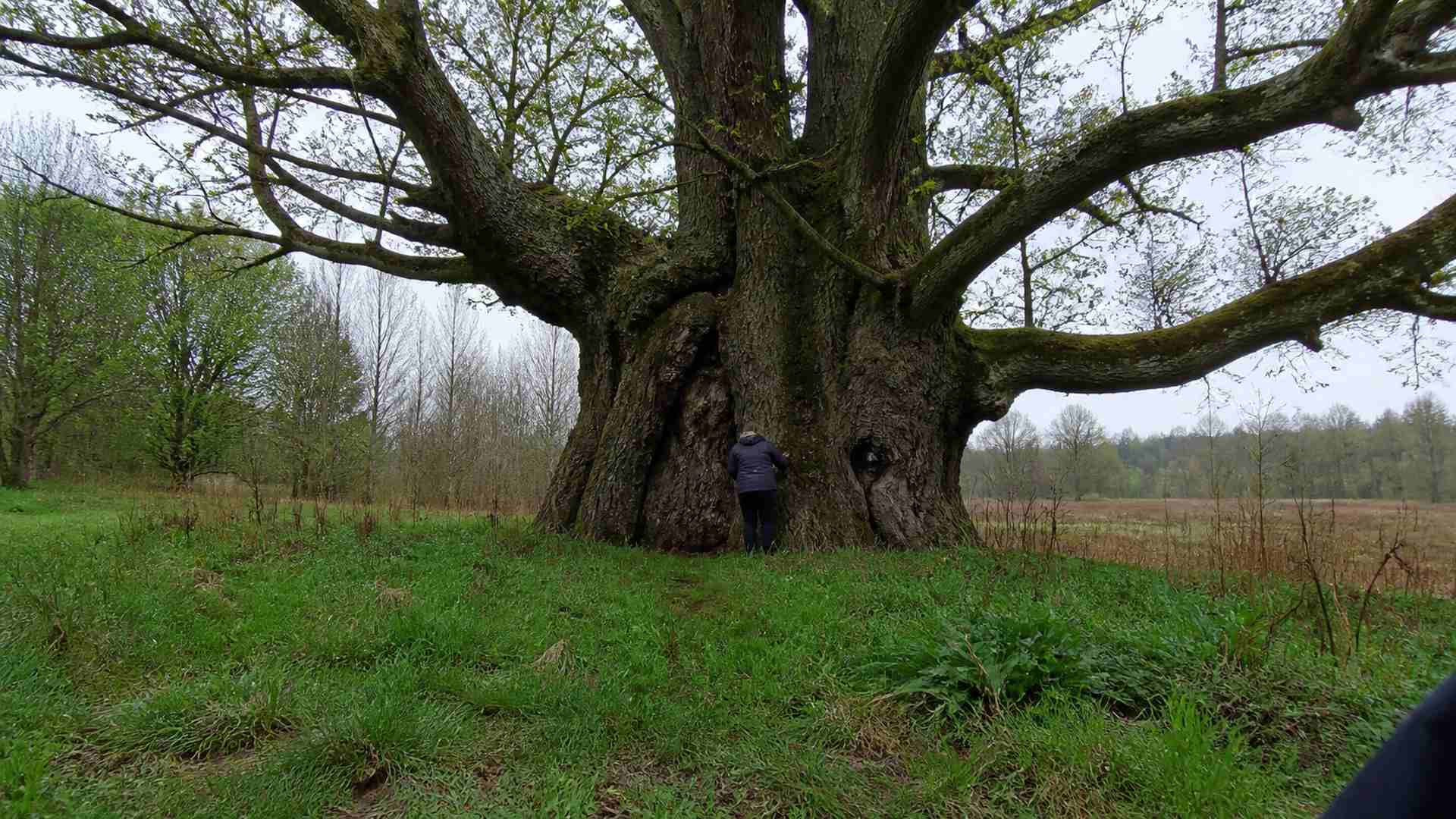
The pines of Mežaparks are old — many were growing before the neighbourhood was created. They are tall, with a high crown, and in the sandy ground their root system is wide but shallow. In practice that means two things.
First, pine tolerates root damage and soil compaction very badly. Every new parking space, terrace, path or piece of heavy machinery near the trunk reduces the tree's feeding zone, and the result shows years later — a thinner crown, dead tops. So here we set machinery further off and work more with ropes.
Second, a pine must not be pruned like a broadleaved tree: it does not regrow from old wood, and a crown lifted too high does not make the tree safer. What can realistically be done with a pine is described in the section crown thinning and reduction.
Heritage trees and protection
In Mežaparks a considerable number of trees reach or exceed heritage tree dimensions. A heritage tree may not be felled — but it may and should be cared for, and it is precisely that care which keeps such a tree safe.
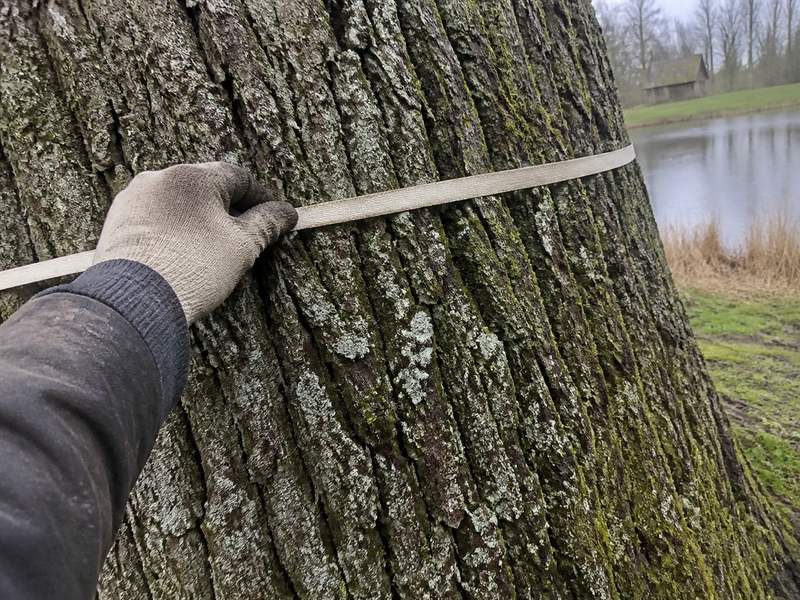
So the first thing we do is measure the girth of the trunk and check what status the tree has. If it turns out the tree is protected, the conversation moves from felling to reducing risk: deadwood removal, lessening the risk of failure, taking weight out of the crown. More on this: heritage and protected trees.
This is not a formality. A protected tree that has been felled is both an irreversible loss and the owner's liability — and we will not do it, even if we are asked to.
Villas, roofs and narrow drives
The old villas, with their complicated roofs, bay windows and garden architecture, are exactly the case where dropping a branch freely to the ground is not acceptable. Every section is lowered on a rope — more on the method: tree removal over roofs.
Access is limited by narrow streets, old fences and entrances built for another age. During events around the Mežaparks open-air stage the traffic changes substantially, and that affects when machinery can get in at all. We therefore usually put planned work in on weekday mornings.
The old garden species in the villa gardens of Mežaparks — first we establish what the tree is
Alongside the pines, the gardens of Mežaparks hold what the house owners themselves planted a century ago: red oaks, beeches, broad-leaved limes, silver maples, cedar pines, thujas and other introduced species not found in Latvian woodland. From the outside a mature tree simply looks large, but the species determines the whole pruning plan — how much crown may be taken off at once, in which season to do it, and whether the tree can regenerate branches at all from the point where it is cut.
Beech and red oak, for example, tolerate crude shortening badly and answer large cuts with decay, whereas lime and maple regenerate far more readily. To get it wrong is to ruin a tree for which there is no quick replacement.
So at the inspection we first establish the species and the condition of the crown, and only then talk about the scope of the work. We have gathered more on the differences between species in the section tree species, but the right solution for the particular tree we choose on site — see also the tree health assessment.
Deadwood high in the pines over paths and parking spaces
The pines of Mežaparks are tall and their crowns start high up. Branches that die off over the years in the lower crown stay hanging ten metres and more above the ground — often directly over a drive, a car, a terrace or the footpath towards Ķīšezers. The ground beneath is sandy and soft, so a fallen dead branch usually leaves no mark, and the owner only notices once something has already been damaged.
We cannot simply reach branches like these from the ground. Depending on the access, we work with climbing technique in the crown or with a MEWP, if there is room in the grounds and the surface will bear it. If the entrance is narrow or there is no way through between the villas, we carry out the work without vehicle access, lowering the branches on ropes.
We suggest looking over the pines after strong wind and wet snow — that is exactly when dead branches break off and stay caught in the crown. A hung-up branch is not something to wait on; it needs taking down. See also deadwood removal.
What we do in Mežaparks
All of our services are available in Mežaparks. The most requested in this neighbourhood:
- Dangerous tree removal — Dead, rotten, leaning and damaged trees. We assess first, then cut.
- Emergency tree removal — Fallen and broken trees after a storm — we come out the same day.
- Tree crown care — Crown shaping, thinning and deadwood removal.
- Stump grinding — Stump grinding without digging — the lawn is left almost untouched.
- Tree health assessment — Is the tree dangerous? We inspect it and tell you what to do.
- Branch and timber removal — Branch and timber removal, including where someone else did the cutting.
The full list with descriptions is in the services section.
How the work is done
- We get back to you within 5 min. Fill in the form and attach photos showing the tree at full height, its base and the route up to it. That is often enough for a rough quote.
- Assessment. We come back with an approximate price and method. If access in Mežaparks is difficult, we come out to look before the work.
- Permit, if one is needed. We check whether the particular tree needs one in Rīga and file it on your behalf.
- The work. We agree a time, cordon off the working area and arrive with everything needed.
- Clearing up. We chip or collect the branches and take them away. We do not leave wood chip behind. If you want the firewood, we cut it to length and stack it where you ask.
What the price depends on in Mežaparks
There is no flat rate per tree, and in Mežaparks least of all: here the quote is set more by the tree's status and the access than by its size. We reckon in the tree's height and girth, its species and condition, the distance to the building, the amount of rope work and hauling the material away.
In Mežaparks the price is most often determined not by the size of the tree but by the care required: rope work above a historic building and restricted access for machinery take longer than felling the same tree in an open garden. We have put the full list with explanations on the prices page.