
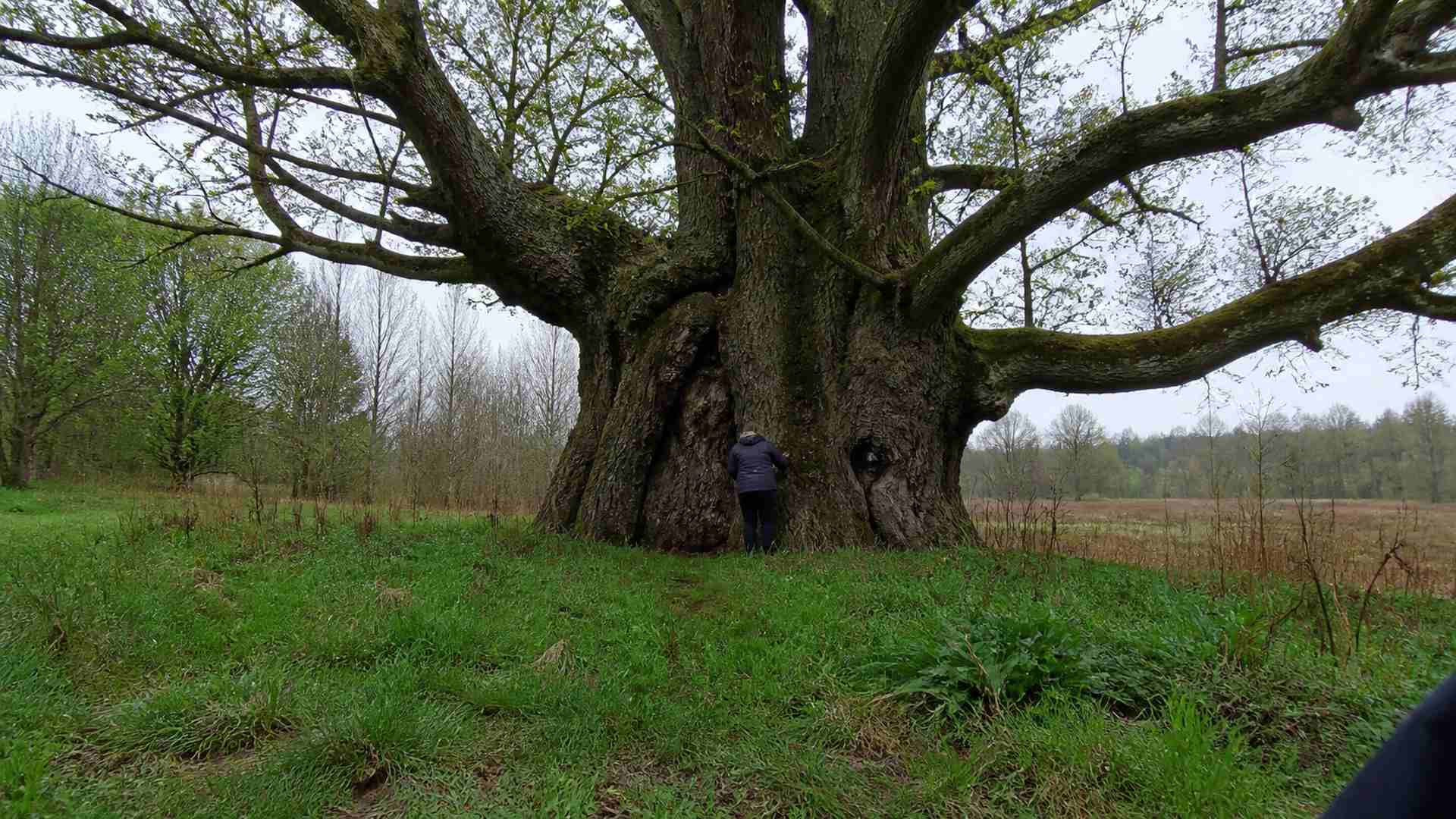
What a heritage tree is
A heritage tree (dižkoks) is a tree that has reached a size at which it becomes protected in its own right. The protection does not follow from where the tree grows or who owns the land — it follows the tree. A heritage tree growing in a private garden is just as protected as one growing in a city park.
The logic is simple: a tree like this cannot be replaced. You can plant a new tree any spring, but a tree of one or two hundred years old cannot be renewed within a human lifetime. That is why the law takes these trees out of everyday commercial decision-making.
In practice the most important question is usually narrower: is this particular tree already over the threshold. Whether it can lawfully be removed at all depends on that, which is why it is worth establishing before you make plans, not after.
The criteria differ by species
This is the part people most often do not know. There is no single threshold for all trees. Protected status is determined by trunk girth or diameter and/or the height of the tree, and these figures are specific to each species.
The reason is biological. Species naturally grow to different sizes. Oak, lime and ash reach a girth over their lifetime that birch, rowan or apple will never attain. If the threshold were the same for all, some species would never reach it however old and impressive they grew, while oaks would reach it while still comparatively young. So the threshold is set separately for each species: higher for the stoutest species, lower for the smaller-growing ones.
We do not quote the specific figures here. They are laid down in legislation with a schedule of species, and a figure quoted from memory is precisely what leads people into error in both directions — either felling a protected tree, or spending years afraid of a tree that is not a heritage tree at all. The official schedule is worth consulting at source. It is simpler to measure the trunk and compare — and we can do that.
A tree can also become protected on height, not only on girth. A slender but very tall tree may meet the criterion when it does not yet meet it on the trunk. So when checking, both are looked at.
How to measure the trunk correctly
The measurement is straightforward, but almost everyone doing it for the first time gets it wrong. There are a few rules:
- Measure at the prescribed height above ground, not at the base itself. At the base the trunk is always wider, and measured there almost every old tree looks like a heritage tree. The standard measuring height is set out in the methodology — worth checking rather than guessing.
- On a slope, measure from the upper side. If the tree grows on a slope, the height is taken from ground level on the upper side of the slope, not the lower. Otherwise the measurement comes out too high up the trunk, and the trunk too slender.
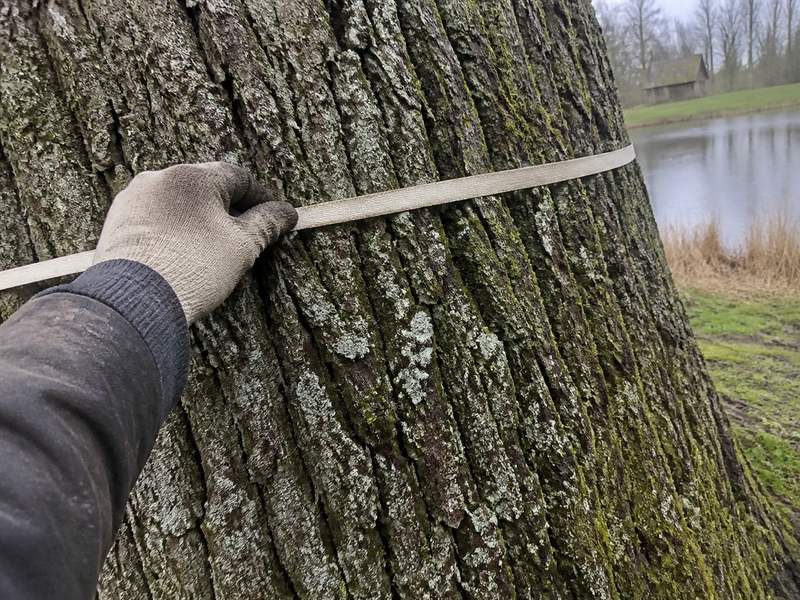
- Measure the girth with a tape right around the trunk, snugly and horizontally, not at an angle. A skewed tape always gives a larger figure. Diameter is obtained from girth by dividing by 3.14.
- Mounds, roots and bark. If soil, mulch or paving has been built up against the trunk, the true ground level is not what you see. That changes the measurement.
- Multi-stemmed trees are assessed differently. A tree that divides into two or three stems from the base is not one thick trunk. The methodology assesses such trees separately, and adding the girths together yourself is a mistake.
- An unusual trunk. Burrs, cavities, old wounds and a fork exactly at measuring height call for working to the methodology rather than by eye.
If the measurement comes out close to the threshold, this is the case where it is worth having the tree measured by someone who does it regularly. A difference of a few centimetres here decides whether a saw may go near the tree at all.
What protection means in practice
- Felling is not the owner's decision. A heritage tree may not be felled at your own discretion, not even on your own land and not even if it is in the way. Approval is required, and it is a stricter process than an ordinary tree felling permit.
- Crown work can also be restricted. A heritage tree may not be pruned in the way ordinary trees sometimes are. Cutting branches as you see fit is not permissible here, and some work requires approval.
- The surroundings of the tree are protected too. Around a heritage tree there is a zone in which construction, groundworks, excavation or paving that would damage the root system are not permitted. In practice this is the most common way an old tree is killed — not with a saw, but with a trench. If work is planned near the tree, start with root protection during construction.
- A duty not to harm the tree. Protection means not only "do not fell" but also do no damage.
Set against the procedure for an ordinary tree, it compares like this:
| Ordinary tree | Heritage tree | |
|---|---|---|
| Who decides on felling | The local authority under its own regulations | A stricter procedure, with the nature conservation side involved as well |
| Crown care | Generally unrestricted, subject to the season | Restricted; some work requires approval |
| The ground around the tree | General requirements | A protected zone around the crown and roots |
| Source of the status | Location and size under local authority regulations | The tree's size for its species — the status follows the tree |
A heritage tree is an asset, not just a burden
Clients often see this status as a problem. Frequently it is the opposite. A century-old oak or lime is the oldest and most valuable thing on most properties — it gives shade that no new planting will provide for decades, it sets the character of the whole garden, and it affects the value of the property. Cut down, it takes that value away for good, and protection to a large extent shields the owner from a decision that cannot later be undone.
An old tree is also not automatically a dangerous tree. A cavity in the trunk, thick deadwood in the upper crown and bracket fungi are a normal part of an old tree's life, not a death sentence. Trees like this can be maintained for decades — with assessment, deadwood removal and monitoring.
If you think you have a heritage tree
Identify the species
Without the species the criterion cannot be applied. If you are not sure, looking at the bark, leaves and buds helps — more on that under tree species.
Measure the trunk correctly
With a tape, at the prescribed height, from the upper side on a slope, horizontally right around the trunk.
Compare with the official species schedule
The criteria are species by species. Consult the current source, not a figure you remember.
Check whether the tree is already registered
Some heritage trees are recorded in nature data registers. Absence from the list does not mean the tree is unprotected, however — the status is set by size, not by the entry.
Do nothing irreversible until it is clear
Do not cut, and do not touch the crown. A mistake here cannot be put right.
If you would like us to do this, we measure the tree, identify the species, compare it with the criteria and tell you where the tree stands in relation to the threshold. If it turns out that a permit is needed after all and is possible, we arrange it for you — how the process itself works is described under tree felling permits.
If a protected tree is dangerous
Protection does not mean the tree is left to fall on the house. It means you may not act on your own initiative.
The first step is a tree condition assessment: what exactly is wrong, how serious it is and what lies beneath it. Very often the answer is not felling. On an old tree you can remove the deadwood, reduce the weight of the longest and heaviest limbs and reduce the crown so that the load on the weak point becomes acceptable, and the tree stays. Sometimes it is enough to move a parking space or a bench from under the tree — risk is a relationship between the tree and what sits below it.
If the tree does have to be removed, then it is done with approval, and technically almost always in sections, because old heritage trees grow next to buildings and in tight spaces. If the tree has already fallen or split, that is an emergency, and you act immediately and notify afterwards — but even then it is worth photographing everything before anything is moved.
Before buying a property
If you are planning to buy a house with large old trees, protected tree status is something to know before the purchase, not after. It affects where you may build, where you may dig and what can be done with the garden at all. We check this along with the condition of the other trees — pre-purchase tree survey.
What the costs depend on
Measuring and checking is a small job, and we often do it alongside an inspection. Costs beyond that are set by how complicated the case is: whether an inspection report is needed, whether approval is needed and from how many bodies, and — if work on the tree goes ahead — the size of the tree, the location, vehicle access and whether we have to climb or use a platform. We have set out the factors on the prices page. In your enquiry it helps to give the address, the species if you know it, and to attach photographs showing the whole tree and the base of the trunk.