
Why look at the trees before buying at all
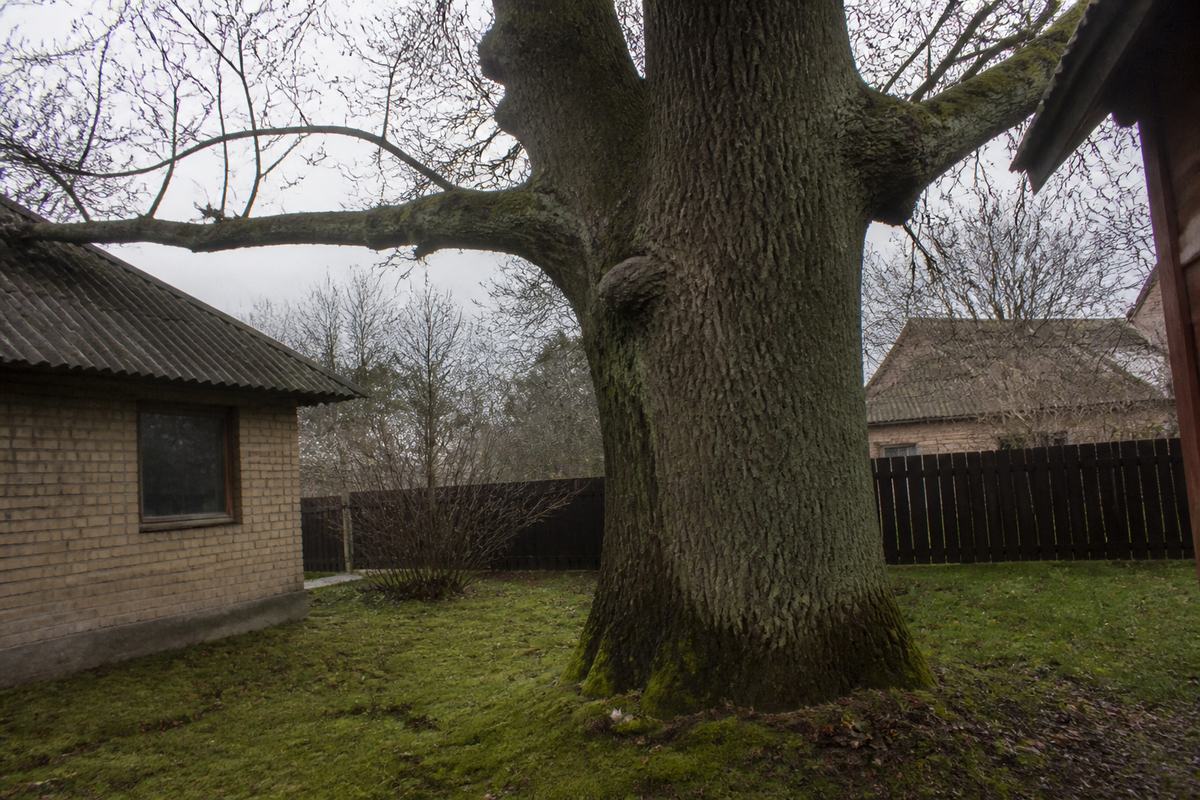
A house is inspected by a surveyor before purchase. The trees fall outside that, and during a viewing nobody usually assesses them — in summer a large broadleaf tree looks handsome, and that is all the buyer knows about it.
Meanwhile two things can turn out to be expensive. The first: removing a large dead or decayed tree in a tight garden next to the house is a serious job, and it comes out of the buyer's pocket, not the seller's. The second: a large tree may be protected, in which case it may not be felled even if it stands exactly where you had planned an extension, a garage or a pool. Both are easier to discuss before the transaction than to discover afterwards.
What a buyer is worth knowing
- Whether there are dangerous trees on the property and how large a job they represent. Dead, decayed or leaning trees close to the house, the fence or the neighbour's side. We tell you which trees will need work in the coming years and whether that is a pruning-scale job or dismantling a tree in sections between buildings.
- Whether any tree is protected on account of its size. A tree that has reached a certain girth or height is protected and may not be felled regardless of your plans. That is worth knowing before you buy if you are planning to build. How that threshold works is explained under heritage and protected trees.
- Whether trees are growing too close to the buildings. A tree right against the wall, branches on the roof and across the roof covering, roots beneath a terrace or paving. On what roots really can and cannot do, there is a separate piece: tree roots damaging foundations.
- Whether there are signs of damage that has already occurred. Old, badly made cuts, broken branches, bracket fungi at the base of the trunk, ground long since paved or compacted by machinery around the tree. These are the things that go unnoticed during a viewing, but that determine what happens to the tree over the coming years.
- Whether the work you are planning will need permits. If you want to remove trees to free up space, you need to know whether that will be allowed at all. The procedure is described under tree felling permits, and we handle the permit for you later on.
How it works
We come out to the property and walk it. Every tree standing close to a building, a boundary, or a spot where you are planning to do something, we inspect individually — the base of the trunk, the root zone, the trunk and the crown. It is the same process as a tree health assessment, but looking at the whole property and at what you want to do with it.
You then receive a summary: which trees are fine, which need monitoring, which need work and how urgently, which are protected, and which of your plans do not sit well with them. If the trees need work, we tell you what scale it will be — so that you know what to reckon with.
We tell you what state the trees are in and what will technically and practically have to be done about them. What you do with that in your discussions with the seller, and how it is reflected in the transaction, is a matter for you and your advisers.
Often the answer is a good one
Not every old tree is a problem. On many properties the outcome is that the trees are sound and all that is needed is to take the deadwood out of the crown. A large, healthy tree is one of the few parts of a property that cannot be bought and installed — it is an asset that is the very reason some people choose a house at all. If that is the case, we say so, rather than looking for work.
When to do it, and what the price depends on
Best of all before the transaction is concluded, while the price is still open to discussion. If that is not possible, it is still useful immediately after the purchase, because at least then you know what to plan for and in what order.
The price is affected by the size of the property, the number of trees, how many of them are large and close to the buildings, and how far the property is from Rīga — we work in Rīga and within a 50 km radius, including Jūrmala, Mārupe, Ķekava, Salaspils, Ādaži, Olaine, Ogre and Sigulda. The factors are explained on our prices page. In your enquiry it helps to give the address or location, the approximate number of trees, and what you are planning to do with the property — that tells us what to look at first. If you have photographs or a cadastral plan, please attach those too.