When a tree becomes dangerous
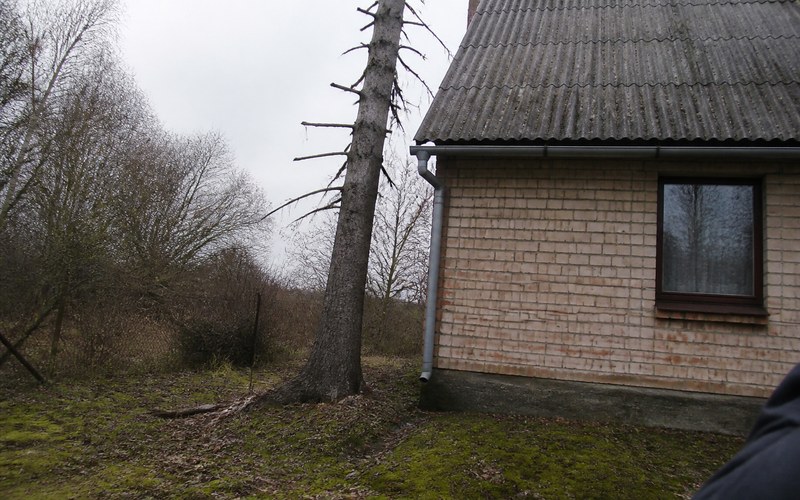
A tree rarely becomes dangerous overnight. There are almost always signs that appear months or years in advance — they simply aren't obvious unless you know what to look for. The most common reasons we get called out:
- Dead and dying trees. A tree with no leaves in summer has stopped growing. The timber in a dead tree turns brittle and breaks unpredictably — often that makes it more dangerous than a living tree.
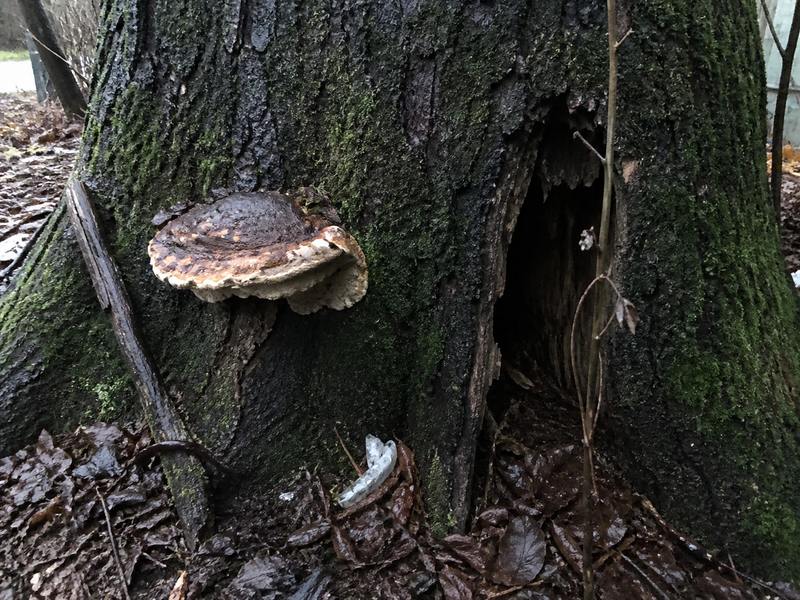
- Decay in the trunk and root zone. A tree can look perfectly healthy from the outside while the inside has rotted away. Bracket fungi on the trunk are a serious sign.
- Lean. Not every leaning tree is dangerous — plenty have grown that way. The dangerous ones are those that started to lean recently: you'll see cracks in the ground at the roots, or turf lifting.
- Cavities and cracks. A large cavity in the trunk reduces the tree's strength and changes how the tree may safely be felled at all.
- Damaged roots. If a trench has been dug close to the tree, paving laid, or heavy machinery driven over the ground, the root system may have been severed.
- Storm damage. Branches that have broken but not fallen, and a trunk that has split after a storm.
First the survey, then the saw
We start by looking at the tree on site. We check the base of the trunk, the root zone, the crown, and everything around the tree — buildings, fences, greenhouses, power lines, the neighbours' property. Then we tell you one of three things:
- The tree has to come down. We explain why, and how it will be done in practice.
- The tree can be kept. Sometimes deadwood removal or a crown reduction is enough to bring the risk down to an acceptable level.
- The tree should be monitored. Not every problem calls for immediate action.
We have no interest in removing more than is necessary. A healthy tree that has been cut down is a loss to the property and to its value, and it cannot be undone.
How the removal works
The felling method is decided by the site, not by the size of the tree. If there is enough clear space around it, we fell the tree whole — that is the quickest and cheapest option. Where there is no clear space, we dismantle the tree in sections: an arborist climbs the tree on rope access and lowers it down piece by piece, under control, so that nothing falls freely.
In more difficult cases we use a MEWP (mobile elevating work platform) or a crane. If the tree is rotten, climbing it can be unsafe, and then machinery isn't a luxury but the only safe way to do the job.
After the work
Removing the branches and timber is included in the job. We chip the brash or gather it up and take it away — we take the wood chip and the debris with us; we don't leave it in your garden. If you would like to keep the firewood, we cut it to length and stack it on site.
The stump is left low. If you want the space to be usable straight away or turned back into lawn, the stump can be ground out — usually we do that on the same visit.
Permits
Some trees outside forest land need a permit from the local authority before they can be felled. The procedure differs slightly in Rīga and in each of the surrounding municipalities. We arrange the permit on your behalf — you don't have to traipse round the institutions yourself. For more on when a permit is required, see our page on the tree felling permit.
What the price depends on
There is no flat rate per tree, because two trees of the same height can call for completely different work. The price is affected by the height of the tree and the thickness of the trunk, the species, its condition, the distance to buildings and power lines, whether there is anywhere to drop the tree, whether climbing or machinery is needed, what the vehicle access is like, how much brash has to be taken away, and whether a permit is required. We have set out the full list with explanations on the prices page.
We can put together the most accurate quote from photographs — send us a few images showing the tree at full height and its immediate surroundings.