
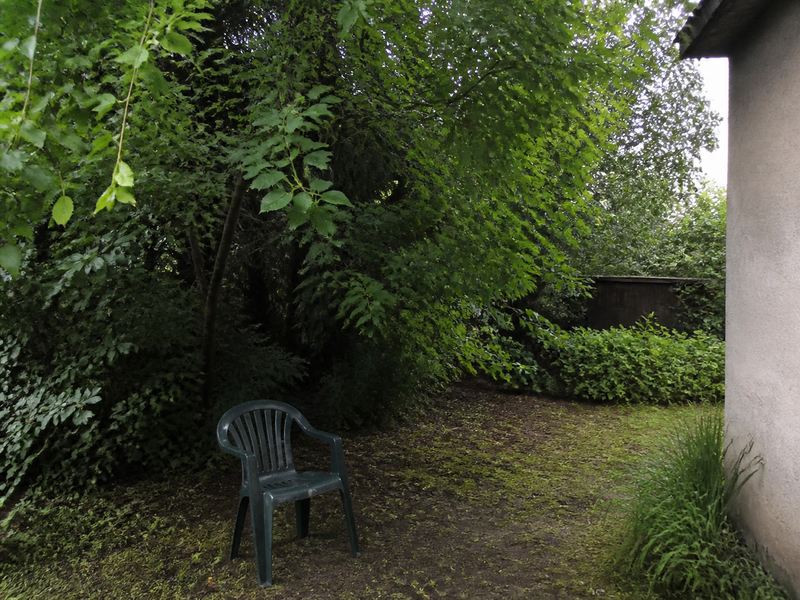
First work out exactly where the light is missing
"The garden is too dark" and "we have to keep the light on in the living room all day" are two different problems with two different solutions. Before starting we always ask three things: which spot matters most, at what time of day you need the light, and which side of it the tree grows on. Everything else follows from that.
It is also worth checking whether the tree is to blame at all. A building, a fence or a neighbour's greenhouse on the north side casts shade that no amount of pruning will remove. And a tree that shades you at midday in midsummer casts almost no shade at all in autumn and spring — sometimes the problem is smaller than it looks in July.
How much light each method gives
| Method | What it does to the light | What it suits |
|---|---|---|
| Thinning | Solid shade becomes dappled — light comes through the whole crown in patches | Lawns, planting, the whole area of garden under the tree |
| Crown lifting | A band opens up beneath the crown — more low morning and evening sun | The space under the tree, a terrace, ground-floor windows |
| Reduction on one side | The edge of the crown pulls back — a specific sector is freed up | A single window, a solar panel, a greenhouse |
In practice we most often combine two: thinning the crown as a whole and additionally reducing the branches directly opposite the window or terrace. That gives a noticeable result while leaving the tree a natural shape. What each method means technically is described in detail in our section on crown thinning, lifting and reduction.
Where the limit lies
If a tree is large and grows on the south side of the garden, it will cast shade, and no amount of pruning will change that — the shade comes from the crown, and the tree needs its crown. To change the amount of light radically you would have to remove so much of the crown that the tree would neither look nor grow normally afterwards. We don't do that, because a few years later a tree like that is both ugly and more dangerous than it was. If someone offers to "cut it back by half", that is precisely the option that will ruin this tree.
There are two further limits worth knowing about in advance. The first: about a quarter of the live crown in a single season is the sensible maximum. If light requires bigger changes, we spread them over two or three seasons. The second: trees grow back. Fast-growing species — maples, poplars, willows — will be back where they started within a few years, so a tree pruned for light means recurring maintenance rather than a one-off job.
When the honest answer is something else
Sometimes the best solution isn't a saw. We'll say so directly when that's the case:
- Accept a smaller lawn. Grass under a large tree will never be thick. Plenty of shrubs and perennials grow well in shade, and a shade garden can look better than a patch of thin grass.
- Rearrange the garden. A vegetable plot or a flower bed can be given a sunnier position. A terrace is sometimes easier to move than a tree is to remake.
- Remove the tree rather than mutilate it. If a tree has grown disproportionately large for a small garden and the shade makes the plot effectively unusable, it is more honest to remove the tree and plant a species that suits the spot than to cut it back every other year. We should add that some trees need a permit from the local authority before felling — we handle that paperwork for you.
If the shade comes from a neighbour's tree
This is a very common version of the problem, and it is more a legal question than a technical one. In short: a tree belongs to whoever owns the land its trunk stands on, and shade in itself is not grounds in Latvia for demanding that a tree be pruned. Nor can branches overhanging the boundary simply be cut without agreement. In practice this is almost always resolved by a conversation and a joint agreement — and we can carry out the work once both sides have agreed. How these situations are usually handled is described in our section on neighbours' trees and liability.
Timing
The dormant season is the best time for most broadleaved trees, because with the leaves off the structure of the crown is visible. But work done for light has one practical wrinkle: a shade problem is best assessed in summer, when the leaves are on. So we often come out to look in summer, agree what needs doing, and carry out the work in autumn or winter.
What the price depends on
The height of the tree and the size of the crown, the method, how much of the crown has to be worked, whether we have to climb on ropes or can use a platform, vehicle access, and the volume of brash to be taken away. Thinning a whole crown takes longer than reducing a few branches on one side. We've set the factors out on the prices page. The most useful thing you can describe in your enquiry is the exact spot where the light is missing — that shows us the problem better than a description of the tree itself.