
Who usually needs this work
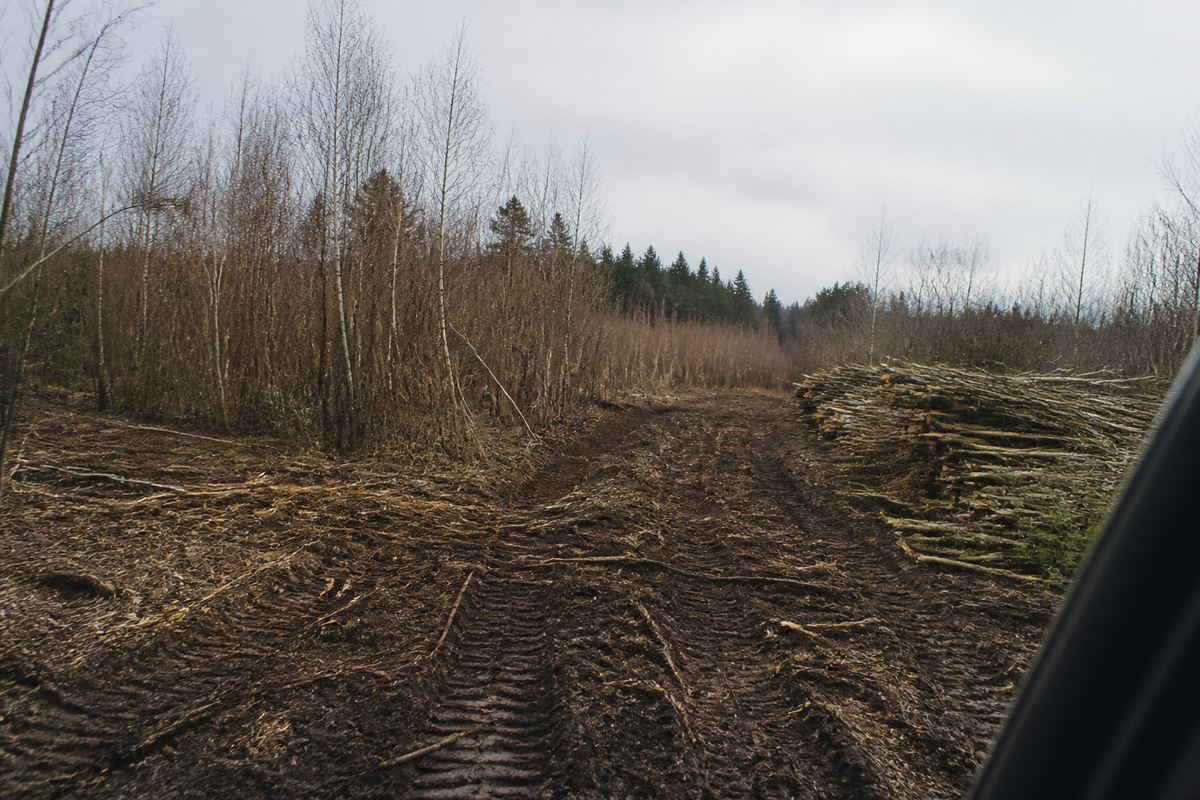
- A newly bought overgrown plot. On paper it is building land; on the ground it is ten years of aspen and maple regrowth that you can neither walk through nor find the boundary in.
- Preparation for building. Space for the house, the access and the machinery has to be cleared before the excavator arrives, not while it is there.
- Reclaiming part of a garden. The edge of a field or garden that has turned from lawn into scrub over twenty years and is still advancing.
- A neglected old garden. Overgrown fruit trees, hedges gone shapeless, self-sown birches and maples.
- Commercial sites. The grounds of a leased property that need putting in order — there is a separate page on that: commercial tree care.
First decide what to keep
This is the one part that cannot be put right afterwards. With machinery a plot can be stripped bare in a day, but a mature tree takes fifty years to grow and cannot be put back. A large healthy tree is worth money to a property, and it is the one thing that makes new development feel like somewhere people live rather than a building site.
So before the saw comes out we walk the plot with you and sort what is growing there into three groups: what definitely has to go, what is yours to decide, and what ought to be kept. We take account of species and condition — different species age very differently — and also of whether a tree will stand up to losing everything around it. A tree grown in a dense stand, left alone in an open field, will often break in the first storm, because its trunk has never had to cope with wind. We tell you that in advance.
Roots are a separate matter. If a tree is being kept on a plot where machinery will later be driven and foundations dug, it will most often die a few years later — not immediately, so nobody connects the two. If you really want to keep a tree, its root zone has to be fenced off during construction, and that has to be planned before the machinery comes onto the plot.
How the work goes
Survey and plan
We walk the site, count the large trees, check the boundaries, the access and where the trailer can stand. We agree what stays and what goes.
Paperwork
We check whether the trees in question need a felling permit and whether any of them is protected. If a permit is needed, we obtain it.
Clearing the understorey and scrub
We start with the lowest growth. Once the scrub is off you can see the ground, the stumps, the stones and what is actually growing on the plot. The plan often changes slightly at this point.
Felling
Where there is room, we fell trees whole. Near boundaries, cables and buildings we work in sections.
Taking the material away
We chip the brash and cut up the trunks. The chip and timber go with us — on a large plot that is several trips. If you want firewood, we cut it and stack it on site.
Stumps
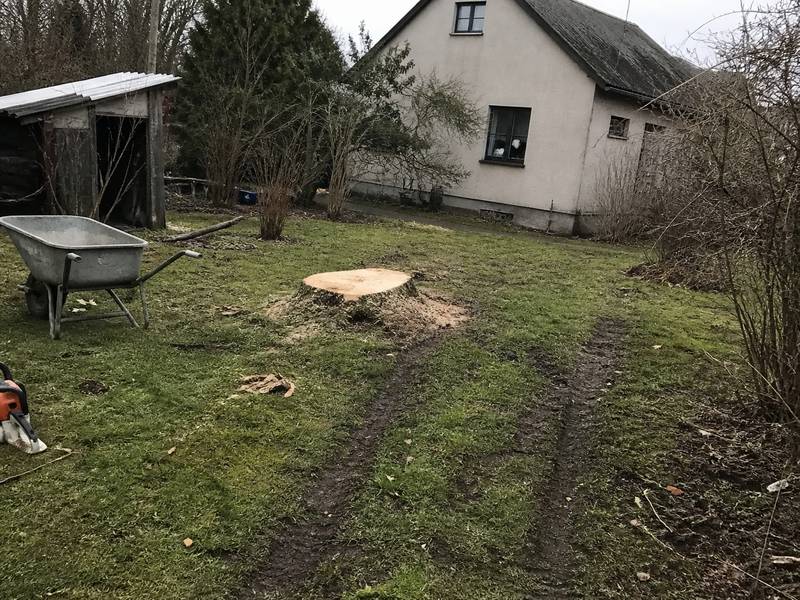
The last step. If the ground is to be laid to lawn or paving, or built on, we grind the stumps out. If the plot is staying natural, the stumps can be left.
Larger plots are rarely cleared in a day. We usually split the work into phases, and after each phase you can see the result and adjust the plan.
Trees outside forest land in Rīga and the municipalities around it often need a permit from the local authority before felling, and the more trees there are, the greater the chance one is required. Some trees are also protected on account of their size: on reaching a certain girth and height a tree becomes a heritage tree, and felling it without consent is an offence with financial consequences — even if nobody knew. On an overgrown plot a tree like that can be standing in the scrub, completely invisible from the road. We check every large tree before starting work, and we handle the permit for you. More on the procedure: tree felling permits.
The other date in the calendar is the bird nesting season. In spring and early summer, clearing scrub and trees on any scale is problematic, because nests there are all but guaranteed. If the work isn't urgent we plan large clearance jobs for autumn or winter — frozen ground also lets machinery onto the plot without damaging it.
Access and machinery
On an overgrown plot the first real question is often not about the trees but about how the machinery gets in. We look at whether the gateway is wide enough, whether the ground will carry a trailer, whether there is anywhere to turn, and whether the material can be taken out without driving over a neighbour's land. If there is no access at all, the work can still be done, it just takes longer — and we tell you that in advance rather than discovering it on the day.
What the price depends on
There is no standard price for site clearance, not even approximately, because two plots of identical size can be completely different jobs. The price is set by the area, the number and size of the trees, how much is scrub as opposed to large trees, the access, the volume of material and the number of trips, whether the stumps have to be ground, and whether permits are needed. It is also affected by the lie of the land and whether there are wet areas machinery can't cross. We quote after a site visit — on a large plot photos aren't enough, because they show neither the boundaries nor what is growing in the middle of the scrub. The factors that make up the price are described on the prices page.