The character of Vecāķi is set by three things: the pine, the sandy ground and the constant sea wind. The buildings are detached houses, summer houses and low-rise blocks, many of them used only in season. Each of those factors changes how the trees are worked on.
Pine in sand and wind
A pine's root system in sand is wide but shallow — the tree holds on by spread rather than by depth. After hard storms off the sea, this is exactly where we see pines uprooted with the whole root plate: not because the tree was diseased, but because the ground no longer held it.
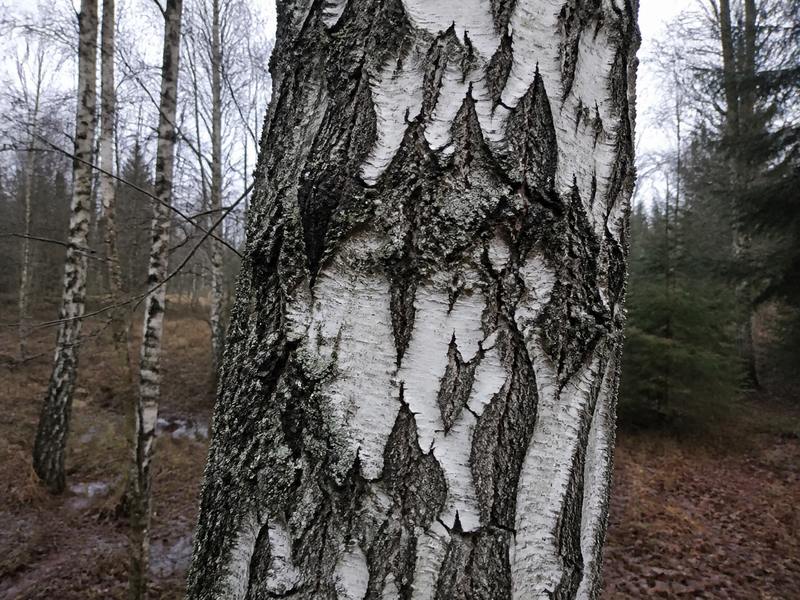
The constant wind shapes the tree too: coastal pines and birches often have a one-sided crown, and the trunk works in a single direction all its life. So a tree like that must not be pruned symmetrically, and the direction of fell has to be planned around the unbalanced crown, not just around the wind direction on the day.
Dead pines
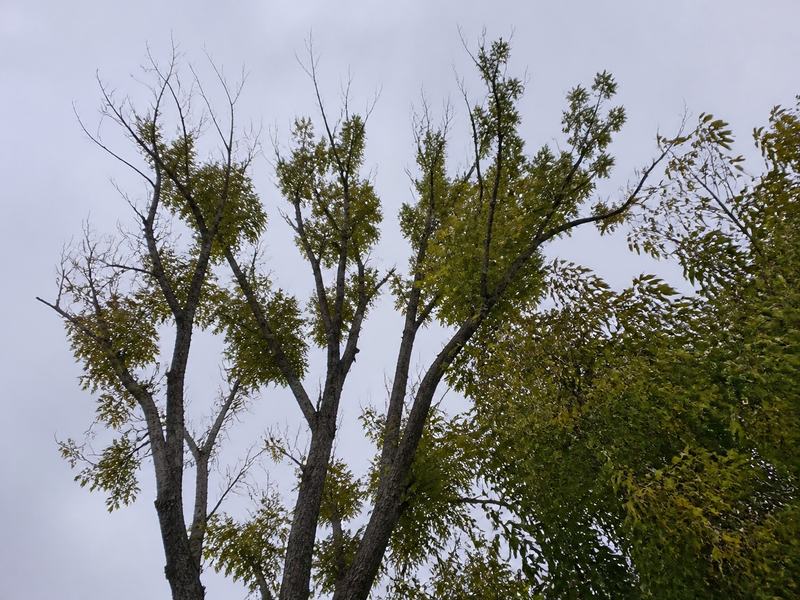
A dead pine is one of the most frequent enquiries on the coast, and it is also the case where waiting costs more. In a living tree the timber is flexible and predictable; in a dead one it turns brittle, branches break under the slightest load, and climbing such a tree is no longer safe.
In practice that means the same tree cannot be taken down on rope access two years later, and a platform is needed — the job becomes more expensive. If a pine has been left without green needles through the summer, it will not come back: dead and dying tree removal.
Seasonal properties and sand
Many properties in Vecāķi are used seasonally, and we often work when the owner is not there. That is no obstacle: we agree access in advance, along with where to leave the cut firewood and where machinery must not be driven. When the job is done we send photos.
Sandy ground also means heavy machinery will not get in in many places, or will leave ruts. So here we work a great deal on rope access and carry the material out to somewhere a trailer can be brought up — tree removal without vehicle access. If the job is not urgent, winter with frozen ground is technically the easiest time here.
The protected dune zone and old pines: what may and may not be cut in Vecāķi
Much of the built-up area of Vecāķi lies within the protected coastal dune zone, and that changes the whole conversation about felling. Even on your own plot you cannot take a pine down simply because it drops cones on the terrace — a felling permit from the local authority is required, and the requirements for a tree on forest land differ from those for a garden tree. Before the work we establish which category the tree actually falls into, and we obtain the permits on the owner's behalf, so that you do not end up with a tree already felled and no paperwork.
The second thing worth checking early in Vecāķi: old coastal pines can reach heritage tree dimensions. Such a tree may not be felled without separate consent, even if it is dead or leaning badly. What we suggest doing:
- measure the girth at a metre above ground before you plan anything at all;
- draw a clear distinction between a dangerous tree and a merely inconvenient one;
- consider crown care or deadwood removal — that often solves the problem, and the tree stays.
After a westerly storm: what to walk round in Vecāķi, and what counts as an emergency
Westerly storms come into Vecāķi off the sea and hit the trees on the dune edge, the ones that no longer have neighbouring trees supporting them on one side. The typical damage is not a snapped trunk but things you cannot see from the veranda at all. When you arrive after a storm, look at:
- whether the sand at the base of the trunk and around the root collar has been lifted or cracked — that is a sign the tree has moved;
- whether there are broken branches hung up in the crown above the roof, a path or a parking space;
- whether the tree has come to rest against the neighbour's fence, a building or an electricity supply cable;
- whether the fresh breaks are pale and dry, which means the timber was already brittle.
Most of this is not urgent and will wait quite safely. Urgent means only two cases: a tree or a large branch currently hanging over somewhere people walk, and a tree that has lifted at the root and is leaning towards a building or cables. In cases like those we aim to come out the same day. If you are not sure which group your tree falls into, describe the situation on the enquiry form and attach photos from two directions — that is usually enough for us to say whether we need to come straight away or whether dangerous tree removal can be planned at a quieter time.
What we do in Vecāķi
Every one of our services is available in Vecāķi. The ones most often requested in this neighbourhood:
- Dangerous tree removal — Dead, rotten, leaning and damaged trees. We assess first, then we cut.
- Emergency tree removal — Fallen and broken trees after a storm — we come out the same day.
- Tree crown care — Crown shaping, thinning and deadwood removal.
- Stump grinding — Stump grinding without digging — the lawn is left almost untouched.
- Tree health assessment — Is the tree dangerous? We survey it and tell you what to do.
- Branch and timber removal — Branch and timber removal, even if someone else did the cutting.
The full list with descriptions is in the services section.
How the work happens
- We get back to you within 5 min. Fill in the form and attach photos showing the whole tree, its base and the route up to it. That is often enough for a ballpark quote.
- Assessment. We reply with an approximate price and a method. If access in Vecāķi is awkward, we come out and look before the job.
- Permit, if one is needed. We check whether this particular tree in Rīga requires one, and we file it on your behalf.
- The work. We agree a time, cordon off the work zone and arrive with everything needed.
- Clearing up. We chip or collect the branches and take them away. We do not leave wood chip behind. If you want firewood, we cut it to length and stack it where you tell us.
What the price depends on in Vecāķi
There is no flat rate per tree. In Vecāķi the price is set by the tree's height and girth, its condition — for a dead pine that is decisive — the asymmetry of the crown, the distance to the building and how far the material has to be carried across sand.
In Vecāķi the price is most often decided by vehicle access: if machinery cannot be brought up and the material has to be carried out over sand, the job takes considerably longer than the cutting itself. We have set out the full list with explanations on the prices page.