
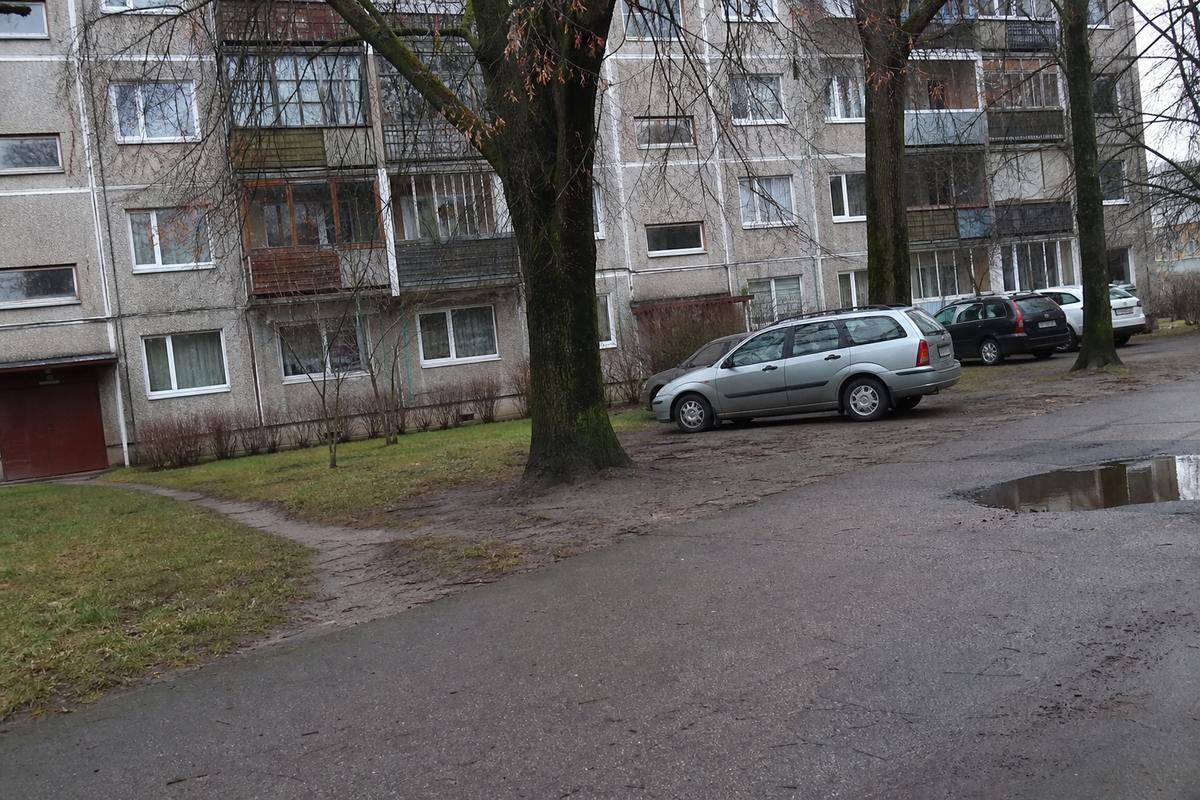
Who may order tree work in a courtyard
This question is harder to find an answer to than the question of the tree work itself. It is also the reason a courtyard tree often stands untouched for years, even though everyone agreed long ago that something needs doing about it.
In an apartment block courtyard a tree usually grows on land held in common ownership or attached to the building as shared grounds. One practical conclusion follows from that: a single resident acting alone usually cannot order a tree to be removed — not even if the tree grows directly beneath their window and is a nuisance to them specifically. How good the reason is changes nothing; in this situation the client is not one individual flat owner.
In practice there are two routes, and both are perfectly navigable:
- Through the managing agent. If the building has a managing agent or a residents' association, that is the shorter route. The managing agent knows the grounds, has dealt with similar work before, and is usually also the party who orders the work and pays for it out of the building's reserve fund.
- Through a decision of the flat owners. If the work has to be paid for separately, or the managing agent will not act without the owners' agreement, a decision of the co-owners taken in the prescribed manner is needed. That takes time, but afterwards the instruction is unambiguous, and nobody can later say they did not know.
What not to do: do not settle it verbally with a neighbour and order the work off your own bat. A courtyard tree is not your tree, even if it grows on your side of the building.
What we can do to get things moving
The most common situation is this. A resident can see that a tree is dead or dangerously leaning. The managing agent replies that the tree looks fine. Both are going on impressions, and so the conversation goes nowhere.
One document breaks the deadlock. We can come out, inspect the tree and prepare a written assessment — what is wrong with the tree, how dangerous it is and what work is needed. That gives the managing agent something to show the owners, and gives the owners a basis on which to take a decision. More on the inspection itself: tree health assessment.
We speak to the managing agent directly — you do not have to act as a go-between in the correspondence. If you are a resident and feel stuck, describe the situation in your enquiry. If you are a managing agent, we deal with you as the client and can plan the work across the whole building or several buildings at once — see tree care for businesses and managing agents.
In courtyards, deadwood removal or crown reduction is needed far more often than removal. The tree stays, the shade stays, but the branches no longer hang over the parking spaces and the windows. An old courtyard tree is an asset that cannot quickly be replaced — a new sapling will give shade like that in thirty years' time.
Permits
Felling trees in urban plantings, including apartment block courtyards, normally requires a permit from the local authority, and in Rīga one is required more often than in a private garden. Sometimes a public consultation is needed as well. We handle the permit for you — the managing agent does not have to traipse round the authorities. When a permit is needed and how it is obtained is explained under tree felling permits. We also check separately whether the tree is protected on account of its girth — such a tree may not be felled regardless of what the residents decide.
How the work is carried out in a courtyard
A courtyard is one of the most demanding places to work in. Around the tree there are buildings, cars, paths, a play area, washing lines and people coming and going all day. Felling in one piece is usually impossible there — we dismantle the tree in sections between the buildings, lowering the pieces under control so that nothing falls freely. The technical side is described there.
The organisational side matters just as much:
- We give residents advance warning. Before the day of the work there should be a notice in the stairwells giving the date and time. The managing agent usually puts it up, and we tell them what needs to go in it.
- Cars have to be moved. The spaces under the tree and beside it must be empty while the work is on. This is the point that most often holds a job up — if two cars have not been moved, the area cannot be cordoned off and the work cannot start.
- Entrances and paths are closed temporarily. We cordon off the working area, and the stairwell entrance or the path under the tree may be out of use for part of the day. If the entrance is the only one, we split the work into shorter phases so people can get out in between.
- People come and go. In a courtyard there is always somebody leaving for work or taking a child to school. There is a person in the working area keeping an eye on the surroundings who stops the cutting for a moment where necessary. At the same time, this is a request to residents too: do not walk through the cordoned area, even if going round is the longer way.
- Sensible working hours. We do not start early in the morning under people's windows, and we do not work in the evening. In practice that usually means the middle of a weekday, when most residents are out and the parking spaces are freer.
Afterwards we chip or collect the branches and take them away. We take the wood chip and branches away — we do not leave them in the courtyard. We sweep the paving and the lawn and collect the sawdust. If the stump needs grinding out, we can do it on the same visit.
What the price depends on
The price is set not by the courtyard as such but by the particular circumstances: the height and diameter of the tree, its condition, how close the buildings and cars are, whether climbing or a platform is needed, whether a platform can get through the courtyard gates at all, how much brash has to be taken away, and whether a permit is required. If there are several trees, the whole visit together usually costs less than each tree taken separately. The factors are explained on our prices page. We can often give an approximate quote from photographs — useful shots are the tree at full height, its base, and the access into the courtyard.