
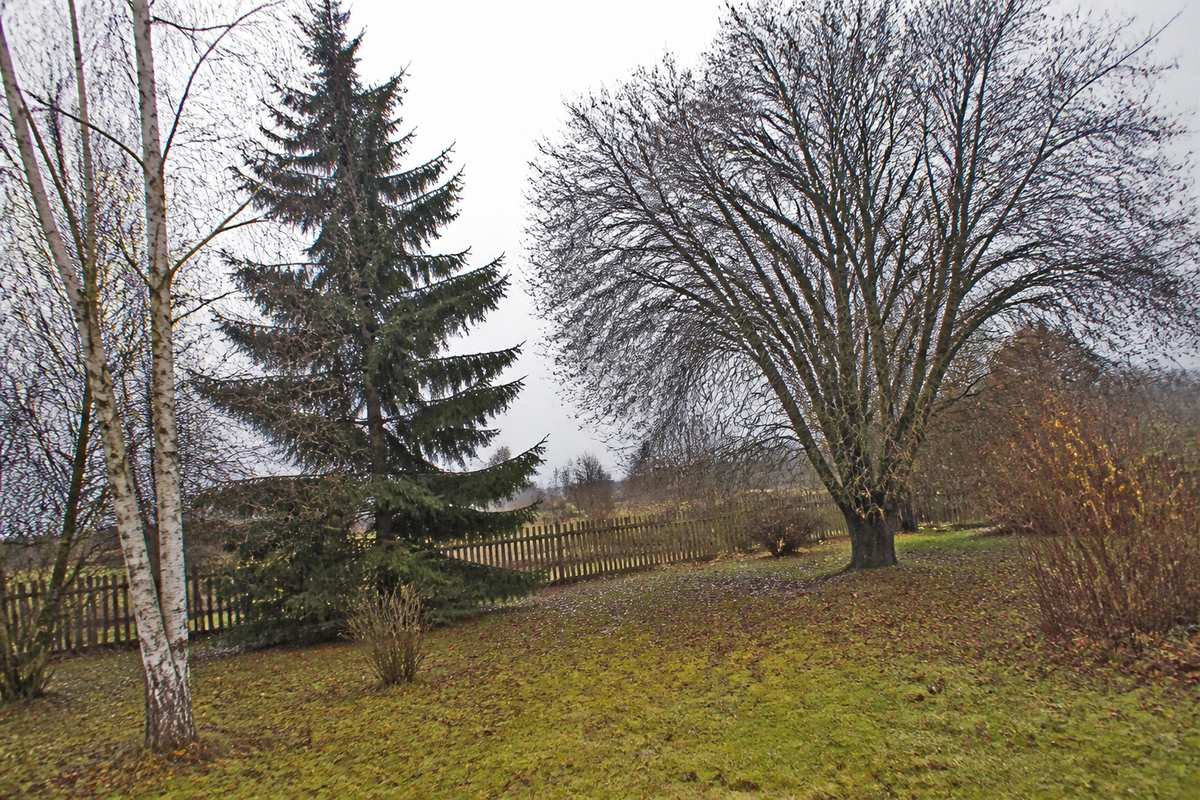
The detached-house streets of Teika were built in the interwar period, and the trees planted then have now reached full size. The plots are compact, the houses close to one another, and a tree that was an ornament to the garden eighty years ago now often takes up half the garden and part of the neighbour's roof.
Old gardens, grown-up trees
The typical Teika situation: a lime, a maple, a birch or an ash growing in a garden, planted at the same time as the house. The tree is healthy, but simply too big for where it stands. It shades the whole garden, the branches reach over the roof, and in autumn the gutters are full of leaves.
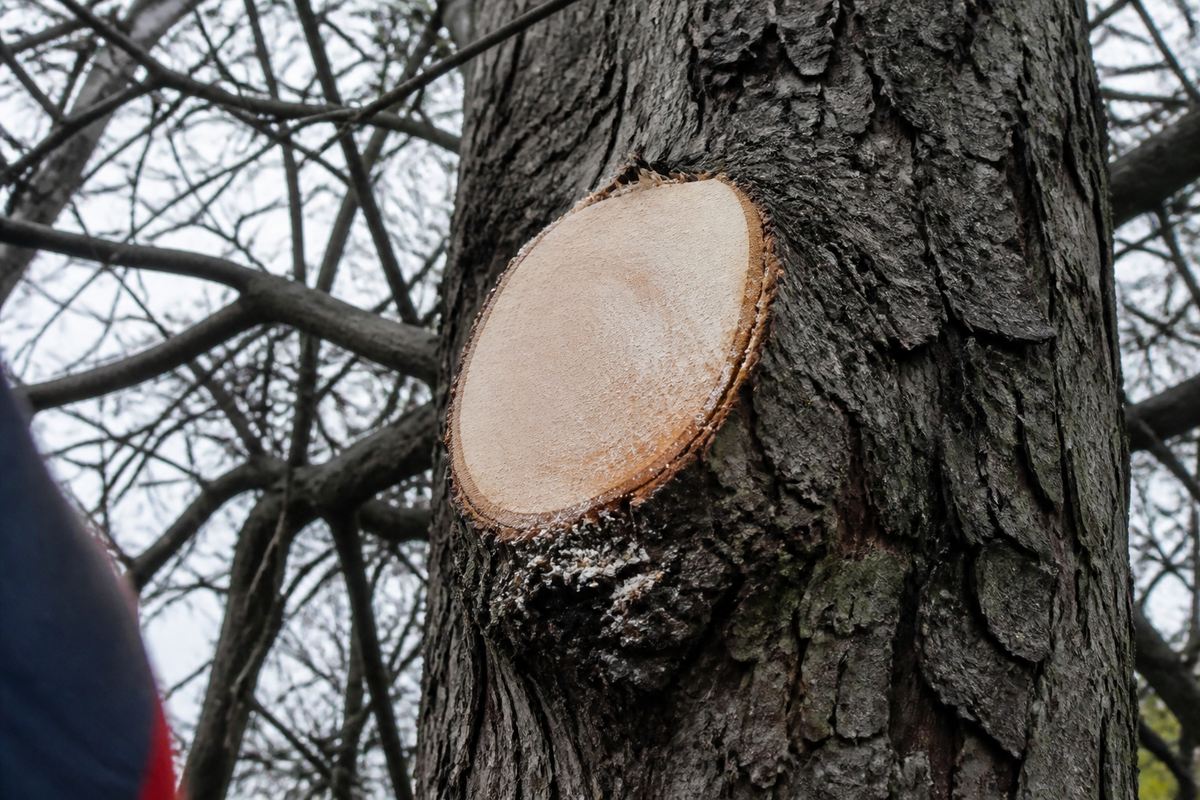
Here we almost never advise removal. A mature tree in an old garden is an asset to the property, and in most cases crown thinning or reduction and deadwood removal solve the problem. What matters is not how much is cut off but exactly where the cut is made — a cut in the wrong place never occludes and becomes an entry point for decay.
Ash trees across Rīga, Teika included, are showing ash dieback. Ash turns brittle quickly, and a dead ash over a pavement or a parking bay is something to deal with, not to defer.
The neighbours are close
In the streets of Teika the gaps between houses are small, and trees often grow right on the boundary. In practice that means most work here involves the neighbour as well — through shade, through branches over the fence, or simply because there is nowhere to fell the tree.
Technically the answer is sectional dismantling: an arborist climbs the tree and lowers it in sections, so that nothing crosses the boundary. The legal side has to be sorted out beforehand — we have written about that under neighbours' trees and liability.
Fruit gardens and access
Many gardens in Teika still have their old apple, pear and plum trees. They have their own right time and their own method: an apple tree left unpruned for years must not be put right in one go, because the tree responds with a dense mass of vertical watershoots. We do it gradually, season by season — fruit tree pruning.
Access in Teika varies: parking is heavily used along Brīvības gatve and Gustava Zemgala gatve, while in the quiet streets the roads are narrow and the gardens often have gates that machinery cannot get through. That is why a photo showing not just the tree but the route up to it is so useful with your enquiry.
Trees and the fabric of the house in Teika
The interwar houses of Teika were built on comparatively narrow plots, and the foundations are often shallower than we would build today. When a maple or a lime planted alongside the wall has grown to full size, the roots find their way wherever there is moisture and room — along the edge of the footing, under the concrete path, into the old clay drains. The typical signs we see most often in Teika:
- block paving or a concrete path lifted on one side and getting more uneven every year;
- rainwater drainage or an old sewer connection that keeps blocking;
- branches lying on the roof and filling the downpipe with leaves, so that water runs down the wall;
- a damp patch in the corner of the cellar that appears on the side where the large tree is.
The tree is not to blame in every case, and does not have to come down in every case. Often crown thinning and pulling the branches back from the roof is enough; sometimes it is a matter of treating the roots correctly at the right distance from the foundations. We look at the tree and the structure together first and tell you what is actually happening; we have written about how roots affect foundations separately.
The rhythm of the year in a Teika garden
In an old garden the work divides up by season, and a good many problems can be prevented by doing things at the right moment. How we plan it in Teika:
- Winter. With the leaves off, the structure of the crown is easiest to read. This is the time for structural work, for taking out dead and crossing branches, and for large felling jobs — frozen ground and an empty garden spare the lawn and the planting.
- Late winter and early spring. Apple and pear pruning, before the sap starts moving.
- April to July. The bird nesting season. During this period we do not carry out major crown work on an occupied tree, and we check for nests before starting. Dangerous trees we deal with at any time of year, of course.
- Autumn. The pre-storm check: cracks at branch junctions, dead branches over the roof and the pavement, fungi on the trunk and the root collar.
If something has broken in Teika after a storm, or a tree has leant towards the house, get in touch — in an emergency we come out the same day. The rest is worth scheduling for the season that suits the tree; what we do and when is set out in the list of services.
What we do in Teika
Every one of our services is available in Teika. The ones most often requested in this neighbourhood:
- Dangerous tree removal — Dead, rotten, leaning and damaged trees. We assess first, then we cut.
- Emergency tree removal — Fallen and broken trees after a storm — we come out the same day.
- Tree crown care — Crown shaping, thinning and deadwood removal.
- Stump grinding — Stump grinding without digging — the lawn is left almost untouched.
- Tree health assessment — Is the tree dangerous? We survey it and tell you what to do.
- Branch and timber removal — Branch and timber removal, even if someone else did the cutting.
The full list with descriptions is in the services section.
How the work happens
- We get back to you within 5 min. Fill in the form and attach photos showing the whole tree, its base and the route up to it. That is often enough for a ballpark quote.
- Assessment. We reply with an approximate price and a method. If access in Teika is awkward, we come out and look before the job.
- Permit, if one is needed. We check whether this particular tree in Rīga requires one, and we file it on your behalf.
- The work. We agree a time, cordon off the work zone and arrive with everything needed.
- Clearing up. We chip or collect the branches and take them away. We do not leave wood chip behind. If you want firewood, we cut it to length and stack it where you tell us.
What the price depends on in Teika
There is no flat rate per tree. In Teika the quote takes in the tree's height and girth, its species and condition, the distance to the house and to the neighbour's boundary, whether there is a drop zone, whether climbing is needed and how far the material has to be carried.
In Teika the price is often decided by how close the chipper and trailer can be brought to the tree — if the material has to be carried out through a narrow garden or a gate, that takes longer than the cutting itself. We have set out the full list with explanations on the prices page.