
Size decides almost everything
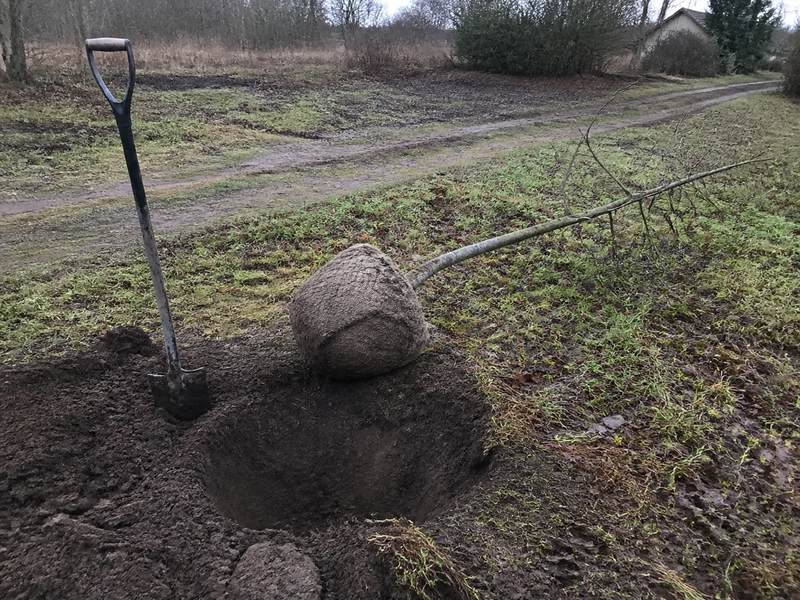
Success in transplanting depends chiefly on one thing — how large and how old the tree is. The bigger the tree, the smaller the proportion of its root system it is physically possible to take with it.
- Young and small trees — a sapling a few years old, a small ornamental tree, a shrub — transplant well. The root ball is proportionate to what the tree needs, and the tree recovers within one or two seasons.
- Medium-sized trees are the borderline case. It is possible given vehicle access, the right time of year, and your accepting a recovery period of several years during which the tree will look worse than it does now.
- Large mature trees cannot be transplanted in practice. On a mature tree the root system extends well beyond the crown, and only a small part of it remains in a ball that can be lifted and carried. The rest is severed. After the move a tree like that usually struggles for a few years and dies — slowly, so by then you have already paid.
If you are asking about a large mature tree, we say so straight away. There are usually two alternatives: leave the tree where it is and adapt the building plan around it, or remove the tree and plant a new one where you wanted it. The second option almost always costs less and ends with a living tree.
Why a transplanted tree has to be pruned
This is worth understanding, because it explains why a transplanted tree looks poor for a while. A tree holds a balance between the roots that take up water and the foliage that transpires it. In a move the tree loses a large part of its roots while the crown stays as it was. The result is a tree that cannot supply itself: the leaves are smaller, the margins scorch, and in the first dry spell it may die back altogether.
So we reduce the crown in proportion to the roots that have been lost. That is not an aesthetic decision, and in the first year the tree will look smaller and thinner than you expected. It rebuilds a full crown over years, not months — we carry out crown care later too, once the tree is established.
If a move is known about a year ahead, the root system can be prepared: in the preceding season the roots are severed around the tree at the distance where the edge of the root ball will later be. The tree responds by producing new fine roots inside that ball, and comes through the move better. This calls for planning, not for a decision taken a week before the excavator arrives.
When transplanting is the right choice
- The tree is in the way of building work — on the line of an access road, an extension or a service run — and is young enough to withstand the move.
- It was planted in the wrong place a few years ago. This is the best case of all: the tree is still small, the roots still compact, and the problem can be put right before it grows. If you can see that the spruce you planted three years ago is going to be too close to the house, now is the time to move it, not in ten years' time.
- Transplanting during a garden redesign — several small trees or large shrubs worth keeping.
- The tree has personal value and is small enough. We will do this work, but we don't promise the outcome, and we say so before the job rather than after.
When it isn't the right choice
There are cases where we don't recommend transplanting, even if you want it:
- The tree is large and mature — as described above.
- The tree is already weak, dying back at the top or affected by decay. A sick tree will not survive a move, and an assessment shows that beforehand.
- The place you intend to move it to doesn't suit the tree. Transplanting a species into a spot where it will die for some other reason is not a solution.
- There is no vehicle access. A root ball is heavy, and if machinery can't reach the tree, a medium-sized tree cannot be lifted.
- The new position will be too small for the mature tree. The problem then simply moves along with the tree.
In cases like these the more honest option is to plant a new tree in the right place. Two or three years later the difference is no longer noticeable, and the tree is healthy.
Season
We transplant in the dormant season — in late autumn after leaf fall, or in early spring before bud break. The tree is then spending nothing on foliage and can put everything into rebuilding roots. A tree moved in summer, in full leaf, loses water faster than its damaged roots can take it up. After transplanting, watering through the first seasons is every bit as decisive as it is for a new planting, and we mulch around the tree so the ground doesn't dry out.
What the price depends on
The price is set by the size of the tree, the weight of the root ball, whether machinery is needed, the distance to the new position, the soil type and the vehicle access at both ends. If the tree has to be prepared in advance, that is a separate visit a season earlier. We nearly always look at the tree before quoting, because the size of a root ball cannot be judged from a photo. The factors that make up the price are described on the prices page.