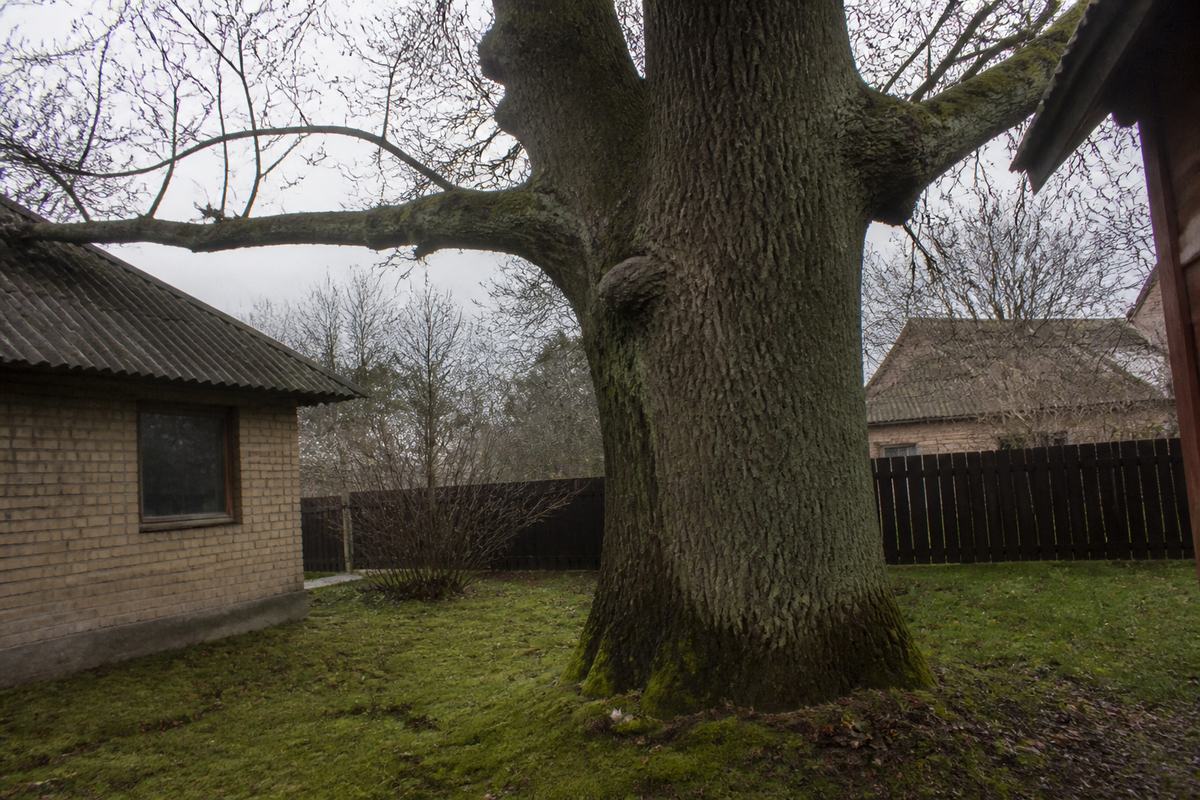
The building stock in Āgenskalns is layered: wooden houses, pre-war masonry houses, low-rise blocks and apartment buildings. What they have in common is that the trees here have been growing a long time and stand close to buildings, to fences and to one another. Around Mārupīte, Māras dīķis and Arkādijas parks the ground is wetter still.
Old trees between old buildings
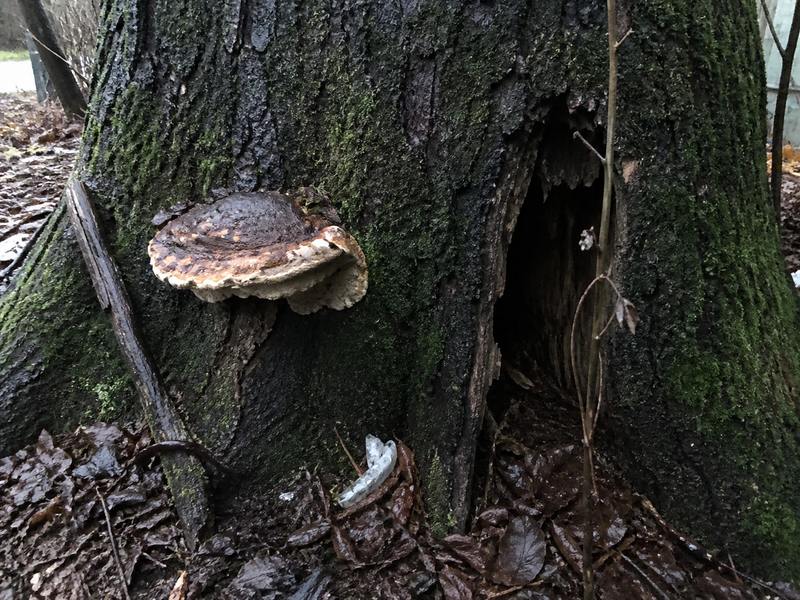
The trees of Āgenskalns are characteristically old, and age brings the signs of age with it: cavities in the trunk, bracket fungi at the base, dead tops, broken branches. That does not mean the tree automatically has to come down — but it changes how the tree is worked.
If there is rot at the base of the trunk, climbing the tree can be unsafe, and the tree does not break where you expect it to. In those cases we choose a different method or different kit — more on that under rotten and hollow tree removal. We always inspect first: a tree health assessment.
Wooden buildings do not forgive mistakes
The historic wooden architecture of Āgenskalns is exactly the kind of building where even a small free-falling branch leaves damage that is expensive to put right — board cladding, verandas, roof coverings and decorative details cannot be restored quickly.
So we work here on the principle that nothing falls freely to the ground: every section is lowered under control on a rope. In inner courtyards, where there is neither a drop zone nor room for machinery, that is often the only possible approach — removal between buildings and in courtyards.
Damp ground and courtyard access
The bed of the Mārupīte, Māras dīķis and the lower-lying parts of Āgenskalns mean that on some sites the soil is wetter. Trees growing there hold less well, and after stormy seasons these are the first to go over. If you notice a tree starting to lean and the ground lifting at its base, that is not something to put off.
Access is the second constant factor: the way in is often through a gate or an archway, parking is restricted and the courtyard is small. If machinery cannot reach, we work without it and carry the material out — removal without vehicle access. It helps to know this in advance, because it changes both the crew and the timing.
Who orders the work when the tree grows in a shared courtyard
In the pre-war tenement blocks of Āgenskalns the land under the building and the courtyard usually belong to all the flat owners jointly. That means one neighbour cannot order a tree to be cut single-handedly, even if it is their windows the branch beats against in the wind. In practice it is resolved in one of three ways: the general meeting of flat owners takes the decision, the building manager orders the work as an authorised representative, or the owners sign a written agreement.
We do not make this more complicated than it needs to be. We come out, look at the tree and prepare a written assessment with a specific description of the work — a document that can be put on the table at a general meeting or sent to the building manager. Often that is exactly what is missing before a decision can be taken at all: while it is still "that big tree", there is no agreement, but once it is clear what is being done and why, the question usually settles itself.
If the tree is dangerous and the matter is urgent, see tree removal in apartment block courtyards. We handle felling permits within the city of Rīga ourselves — how that works is described here.
The tree species of Āgenskalns gardens and what each one means in practice
In the old gardens and along the streets of Pārdaugava the mix of species is fairly predictable, and each one behaves differently.
- Limes — the commonest street and courtyard tree. They take pruning well, but old limes that were heavily cut back in the past tend to build dense, weakly attached crowns of regrowth that break in the wind.
- Maples — fast growing and often self-seeded beside fences and sheds. The root system is shallow, which is why maples above all lift paths and press on foundations and cellar walls.
- Ashes — many are dying back because of ash dieback. A dead ash becomes brittle and unpredictable to cut, so it is better dealt with sooner rather than later (about ash dieback).
- Poplars — tall, with weak timber and a tendency to shed large limbs without warning. In courtyards between buildings they almost always call for sectional dismantling.
- Elms — rarer, but the old elms of Āgenskalns can be valuable, and it is worth understanding the tree's condition before deciding anything.
Identifying the species is not an academic question — the working method depends on it. More on that: tree species.
What we do in Āgenskalns
All of our services are available in Āgenskalns. The most requested in this neighbourhood:
- Dangerous tree removal — Dead, rotten, leaning and damaged trees. We assess first, then cut.
- Emergency tree removal — Fallen and broken trees after a storm — we come out the same day.
- Tree crown care — Crown shaping, thinning and deadwood removal.
- Stump grinding — Stump grinding without digging — the lawn is left almost untouched.
- Tree health assessment — Is the tree dangerous? We inspect it and tell you what to do.
- Branch and timber removal — Branch and timber removal, including where someone else did the cutting.
The full list with descriptions is in the services section.
How the work is done
- We get back to you within 5 min. Fill in the form and attach photos showing the tree at full height, its base and the route up to it. That is often enough for a rough quote.
- Assessment. We come back with an approximate price and method. If access in Āgenskalns is difficult, we come out to look before the work.
- Permit, if one is needed. We check whether the particular tree needs one in Rīga and file it on your behalf.
- The work. We agree a time, cordon off the working area and arrive with everything needed.
- Clearing up. We chip or collect the branches and take them away. We do not leave wood chip behind. If you want the firewood, we cut it to length and stack it where you ask.
What the price depends on in Āgenskalns
Two trees of the same height in Āgenskalns can cost completely different amounts. The price is made up of the tree's condition and any signs of rot, the distance to wooden buildings, the absence of a drop zone in the courtyard, the amount of rope work and carrying the material out through an archway or gate.
In Āgenskalns the price is mostly set by access and working method: a tree in a narrow courtyard, where every section has to be lowered on a rope and the material carried out through an archway, takes considerably more time than the same tree in an open garden. We have put the full list with explanations on the prices page.