
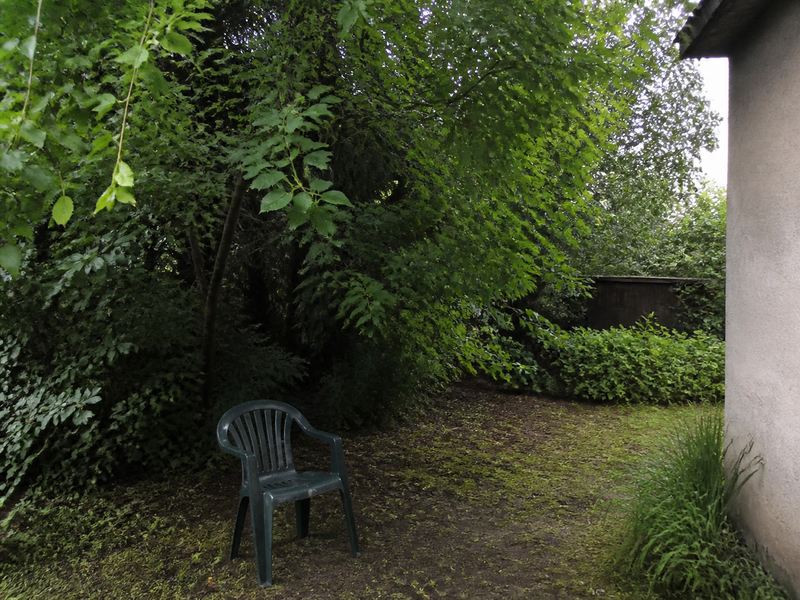
The character of Bieriņi comes from its detached houses, its mature gardens and the green corridor of the Mārupīte. The plots have been lived on for a long time, the trees in them have grown up, and next door there are neighbours over whom those same trees cast shade or drop leaves. In practice that means most of the work is not felling but care.
Light in the garden
The commonest enquiry in Bieriņi is about shade: grass will no longer grow in the garden, the greenhouse gets no sun, the terrace is in permanent shade. The cause is usually one or two large trees that thirty years ago were a small detail in a small garden.
Here it matters to be honest about what can be achieved. On broadleaved trees thinning and crown lifting works well — light gets through and the tree stays. On conifers the options are more limited, because they do not regrow from old wood. Sometimes the honest answer is that the problem is solved by removing one tree rather than pruning five — more on that: pruning for more light.
Orchards and hedges
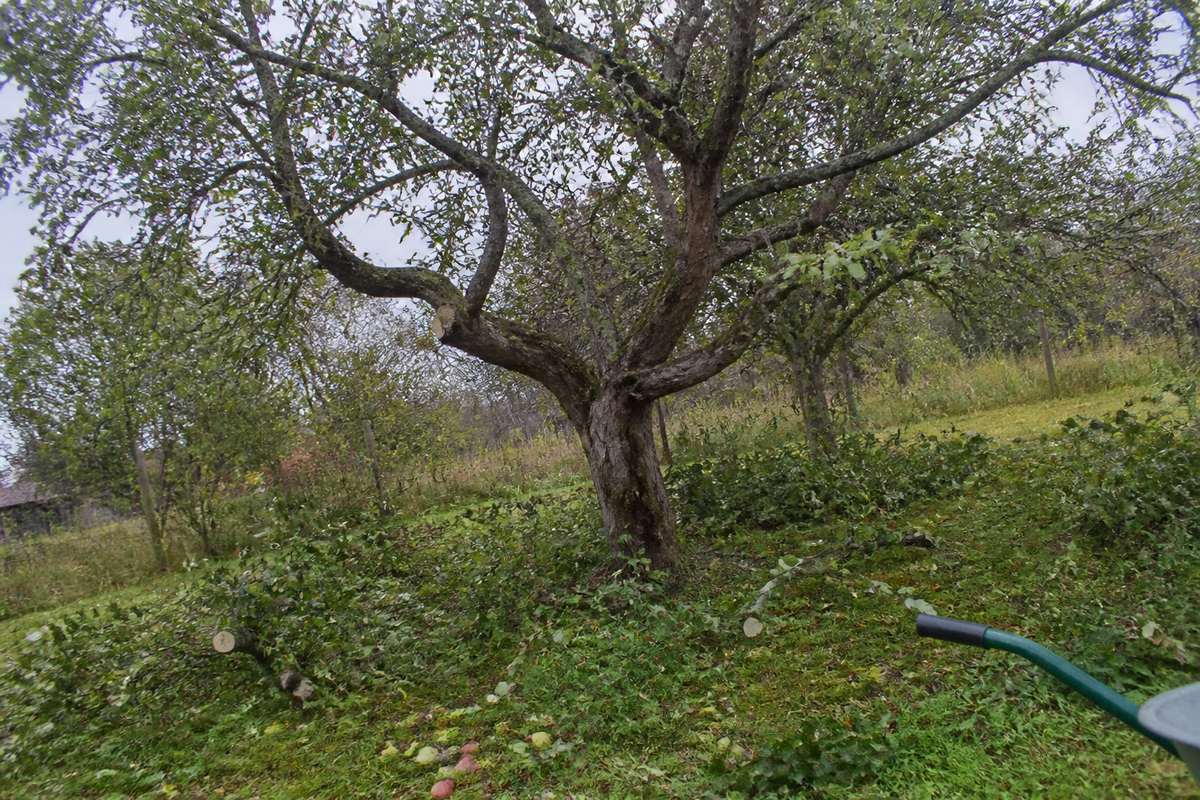
Many gardens in Bieriņi still have old apple, pear, plum and cherry trees. A fruit tree left unpruned for years must not be put right in one go: the tree responds with a dense mass of vertical watershoots, and a year later the situation is worse than before. We do it gradually, over several seasons — fruit tree pruning. The right time is usually the end of winter.
The second frequent subject is hedges and thujas. Thuja does not regrow from old wood, so if it is left for years and then cut back hard, the bare patches will never fill in again. Regular, moderate trimming is the only way to keep a hedge — thuja and hedge trimming.
The Mārupīte and neighbours' boundaries
The bed of the Mārupīte and the lower-lying parts mean the soil in some gardens is wetter. Trees growing there hold less well, and after stormy seasons these are the first to go over. If a tree has started to lean and the ground has lifted at its base, that is not something to leave.
Because the plots sit side by side, a good deal of the work touches the neighbour too — branches over the fence, shade in the neighbour's garden, leaves. Technically that is usually a simple job; what matters most is agreeing it beforehand. On that: neighbours' trees and liability.
Tree and house: roots at the foundations, branches over the roof
The houses in Bieriņi were built across several different decades, and many of them stand on shallower foundations than would be built today. Trees there have often been planted too close to the wall — back then they were saplings, now they are mature. We look at what is actually happening: whether the crack in the wall is down to roots or to the ground settling, and whether it really is this tree's roots lifting the paving. Often the answer is not to cut the tree down. We have written separately about when roots genuinely do threaten a structure and when they do not — tree roots and foundations.
The other side of it is the roof and the gutters. On older houses with a shallow-pitched roof, branches resting on the covering wear the metal away over the years, while leaves and needles fill the gutters until water runs down the wall. What helps here is purposeful crown care: clearing the plane of the roof and lifting the crown, rather than topping the tree. If a branch hangs directly over the covering, we lower it in sections on ropes.
A young tree in a small garden — and an old tree you will not get back
The gardens of Bieriņi are green, but not large. The commonest mistake we see here is a tree planted after a felling that in twenty years will be too big for the same spot — a spruce or a maple five metres from the corner of the house. We tend to suggest a species according to how much room there is above ground and how much below it, and we talk about the size of the mature tree, not the size of the sapling. If a tree has been planted in the wrong place but is still young, it can often be transplanted rather than grubbed out — the older the plant, the poorer the odds.
With old, large trees the conversation is different. If a property in Bieriņi has just been bought and you want a clean, sunny plot, it is worth waiting one season and seeing what these trees give the garden in summer. A healthy oak or lime is part of the value of the property, and it cannot be put back. We will tell you honestly which trees are dangerous and must come down, and which we would keep ourselves. A tree health assessment makes that conversation concrete.
What we do in Bieriņi
All of our services are available in Bieriņi. The most requested in this neighbourhood:
- Dangerous tree removal — Dead, rotten, leaning and damaged trees. We assess first, then cut.
- Emergency tree removal — Fallen and broken trees after a storm — we come out the same day.
- Tree crown care — Crown shaping, thinning and deadwood removal.
- Stump grinding — Stump grinding without digging — the lawn is left almost untouched.
- Tree health assessment — Is the tree dangerous? We inspect it and tell you what to do.
- Branch and timber removal — Branch and timber removal, including where someone else did the cutting.
The full list with descriptions is in the services section.
How the work is done
- We get back to you within 5 min. Fill in the form and attach photos showing the tree at full height, its base and the route up to it. That is often enough for a rough quote.
- Assessment. We come back with an approximate price and method. If access in Bieriņi is difficult, we come out to look before the work.
- Permit, if one is needed. We check whether the particular tree needs one in Rīga and file it on your behalf.
- The work. We agree a time, cordon off the working area and arrive with everything needed.
- Clearing up. We chip or collect the branches and take them away. We do not leave wood chip behind. If you want the firewood, we cut it to length and stack it where you ask.
What the price depends on in Bieriņi
There is no flat rate per tree. In Bieriņi the quote is set by the tree's height and girth, its species and condition, the distance to the house and to the neighbour's boundary, whether there is a drop zone in the garden, whether climbing is needed and the volume of material to be hauled away.
In Bieriņi the price is often brought down by good vehicle access — if a chipper and trailer can be brought up to the tree, hauling the material away costs less than if it has to be carried out to the street. We have put the full list with explanations on the prices page.