Sigulda differs from the rest of the Rīga region in one respect: there is no flat ground here. The Gauja valley, the slopes and the protected nature areas change both how a tree grows and how you can get to it at all. That calls for different planning, not the same as in Mārupe or Ķekava.
Slopes change everything
A tree growing on a steep slope often has a curved trunk at the base — it has worked against gravity all its life. Such a tree is not automatically dangerous, but planning the felling is an entirely different matter: the direction of fall is restricted, and a tree felled on a slope carries on moving after it lands.
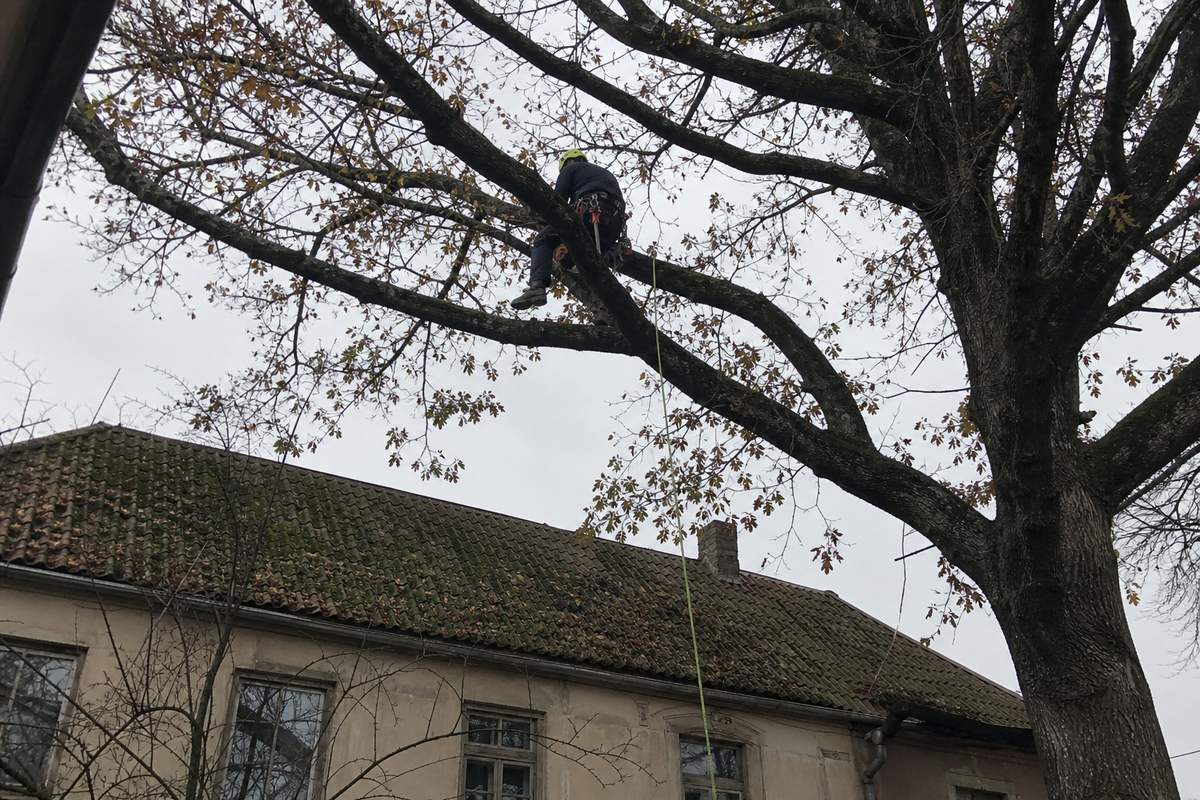
Nor can a MEWP be set up on a slope, and heavy machinery often cannot get there at all. So in Sigulda we work with rope access far more than anywhere else — the arborist climbs the tree and lowers it in sections, controlling every piece.
Protected areas
A considerable part of Sigulda municipality lies within the Gauja National Park and other protected nature areas. There, felling and even tree care can carry additional conditions that do not apply on ordinary private property.
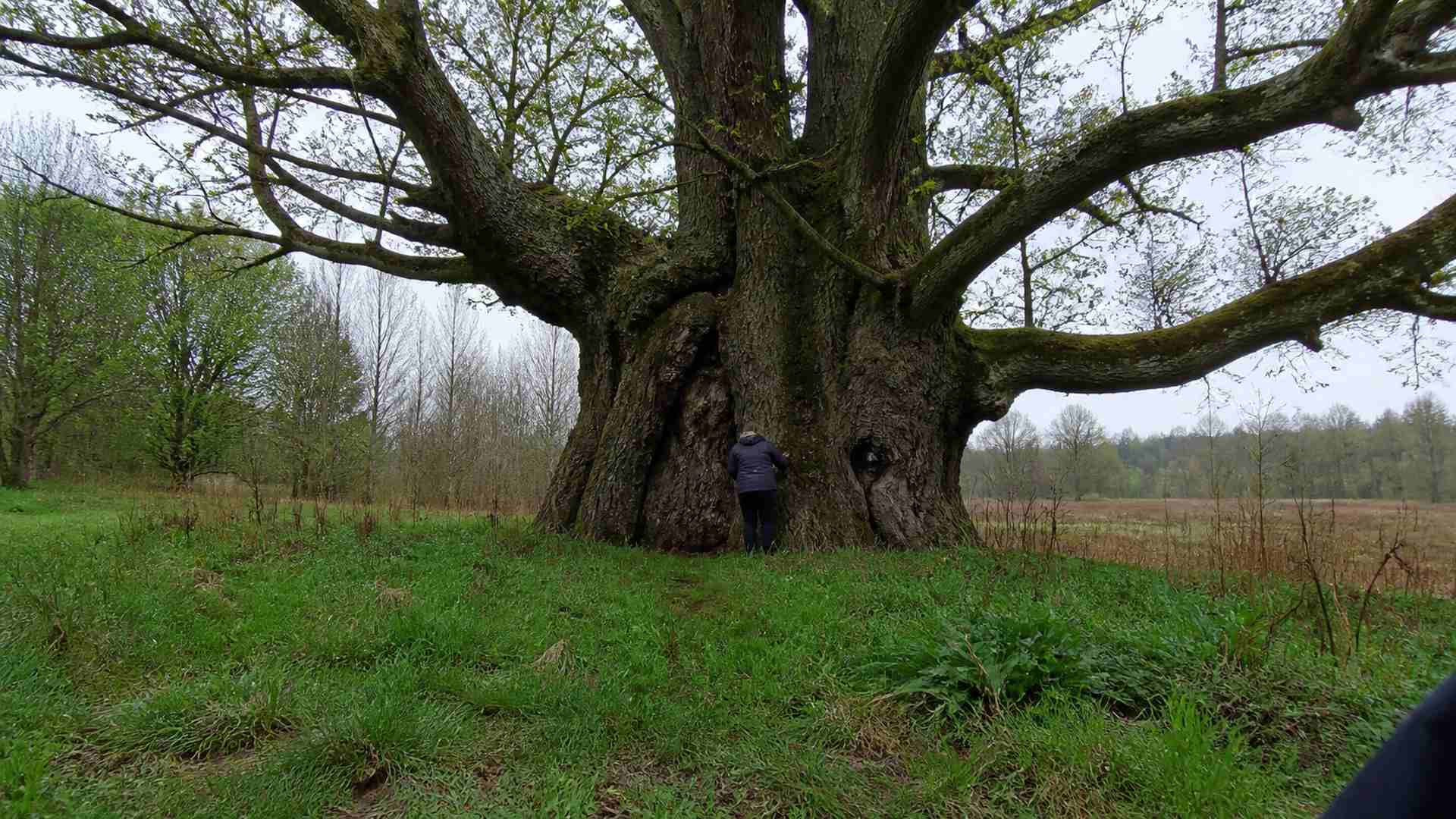
We check that before the work, not after. The same goes for old, thick-trunked trees: if a tree meets the parameters of a heritage tree, it may not be felled, but it may and should be cared for. In that case the conversation moves from removal to crown care and keeping the tree.
Old park and garden trees
Sigulda has a great many old historic plantings, avenues and mature garden trees — oaks, limes and maples older than the houses. For trees like these the right approach is almost never removal.
With a mature tree the aim is to reduce the risk while keeping the tree: take out the deadwood, relieve the risk of failure, sometimes reduce the weight of the crown. The starting point is a tree health assessment — we survey it and tell you how long the tree can stand in that condition and what needs doing now.
Seasonality and traffic
Sigulda is a tourist town with a marked season. During events and in the autumn season the traffic and the availability of parking in the centre and at the visitor attractions change substantially, and that affects when we can bring machinery up.
In practice we solve it by planning work for the first half of the day or outside event weekends. If the job is not an emergency, winter with frozen ground is often the technically safest time on slope sites.
Erosion and exposed roots on the edges of the Gauja valley
On the Sigulda slopes the soil is sandy and water carries it downhill. After every heavy downpour or spring flood we see the same thing: at the edges of ravines and along the sides of paths the tree roots are exposed, the root collar hangs in the air, and the tree is held by the roots on one side only. That is a warning that the tree can go over without wind and without visible decay.
The other side of this story is that removing trees on a slope can make the slope less stable. The root system holds the soil together, and when it breaks down the upper layer begins to slip. So in Sigulda we often advise not cutting the whole row but selecting the particular dangerous trees, keeping the rest and relieving their crowns.
- Exposed, severed or rotten roots at a ravine edge — we assess the tree individually, not the whole group.
- If a tree does have to be removed, we often leave the stump in place so the roots hold the soil for years yet; we offer grinding only where the slope allows it — stump grinding.
- If the roots are close to the foundations of a house or terrace, this explanation of roots and foundations helps.
We begin the assessment with a site visit — a slope always looks different from below than it does from the garden.
Guest houses, campsites and car parks — a tree above visitors
In Sigulda many properties work with visitors: guest houses, campsites, café terraces, car parks, paths and viewpoints. Here the question of a tree is no longer merely practical. If a branch falls on a car, a tent or a person, the liability rests with the owner, and afterwards the question is whether the tree was surveyed.
In practice the most dangerous are not the large dead trees — those get noticed and removed. The most dangerous are living trees with deadwood in the upper crown, a crack in a fork, or bracket fungi at the base of the trunk. They stand for years, and the first strong gusting wind in summer breaks them out precisely above the spot where people are standing.
- Before the season we survey the trees above car parks, terraces and paths and prepare a list of what must be done now and what can wait — tree health assessment.
- In most cases deadwood removal and relieving the crown are enough, rather than felling the tree.
- For businesses and managing agents we can arrange regular surveys — tree care contract.
We fit the timing to you — at a guest house we cut when it least disturbs the visitors. In an emergency, where a tree has already come down or threatens to, we try to come out the same day.
What we do in Sigulda
In Sigulda we offer our full range of services — from a single dangerous tree to clearing an entire site. The most frequently requested:
- Dangerous tree removal — Dead, rotten, leaning and damaged trees. We assess first, then cut.
- Emergency tree removal — Fallen and broken trees after a storm — we come out the same day.
- Tree crown care — Crown shaping, thinning and deadwood removal.
- Stump grinding — Stump grinding without digging — the lawn stays almost untouched.
- Tree health assessment — Is the tree dangerous? We survey it and tell you what to do.
- Branch and timber removal — Removal of branches and timber, including where someone else did the cutting.
The full list with descriptions is in the services section.
How the work happens
- We get back to you within 5 minutes. Fill in the form and attach photos showing the tree at full height, its base and its surroundings. That is often enough for a rough quote.
- Assessment. We reply with an approximate price and method. In more complicated cases we come out to Sigulda to look before the work.
- A permit, if one is needed. We check whether the Sigulda local authority requires one for that particular tree, and we handle the paperwork for you.
- The work. We agree a time, arrive with everything needed and cordon off the working area.
- Clearing up. We chip or collect the branches and take them away. We don't leave wood chip in the garden. If you want the firewood, we cut it to length and stack it where you ask.
What the price depends on in Sigulda
Two trees of the same height in Sigulda can call for entirely different work — one grows in a level garden, the other on a valley slope. The price is made up of the height and girth of the tree, the species, the condition, the distance to buildings, whether there is a drop zone, the amount of rope work and how far the material has to be carried.
In Sigulda the price is affected most by the terrain and access: a tree on a slope with no access track calls for rope work and carrying the material out, which takes longer than a tree of the same size in a level garden. We have set out the full list with explanations on the prices page.