
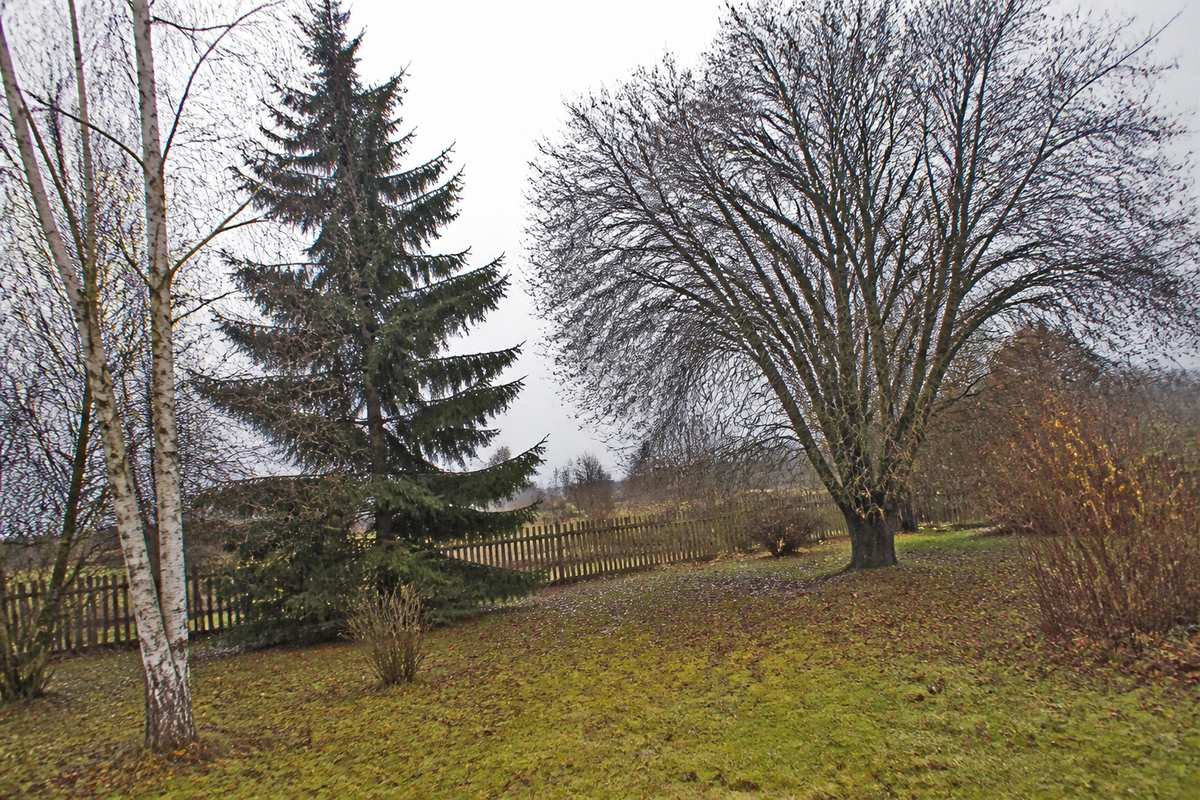
Ādaži municipality is a territory between the Gauja, the lakes and the forests, where a great many new houses have gone up in recent years. That creates a characteristic situation: new buildings stand in old woodland or beside water, and trees that have grown there for decades have suddenly become neighbours to people's homes.
Old forest, new development
When a space is cleared in the forest for a house, the remaining trees are left exposed. A pine or a spruce that has held against the wind all its life together with the surrounding stand now takes the load on its own — and it is precisely these trees that come down most often in the first years after building.
The spruce matters particularly here: its roots are shallow, and in wet soil it holds on less well than it looks. If single tall spruces have been left around your house, it is worth having them surveyed — we will tell you which can stay and which are a real risk. The starting point is usually a tree health assessment.
Wind and storms in the lower Gauja
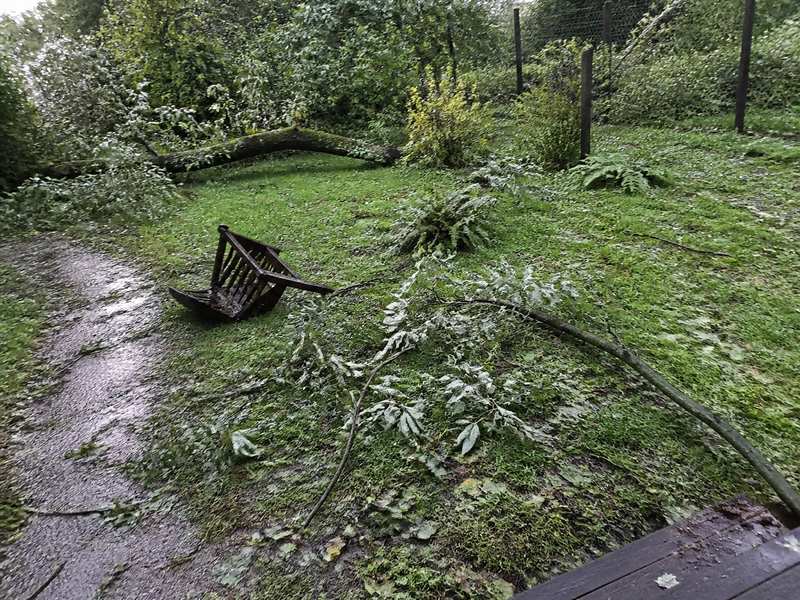
The Ādaži side is open to north-westerly winds, and after every larger storm we get a wave of enquiries here. The typical cases: a branch broken but hung up in the crown; a snapped top; a tree that has leaned towards the house or the fence.
A hung-up branch is the most dangerous of these — it can stay put for weeks and fall without warning. That is emergency work, and we carry it out ahead of the normal queue, trying to get there the same day.
Water nearby and wet ground
The bank of the Gauja, Baltezers, Lielais Baltezers and several smaller lakes mean that on many sites the soil is wet, or at least saturated seasonally. The black alders, birches and aspens growing there grow quickly but are brittle, and their roots hold less firmly.
For our planning that means heavy machinery does not go onto plots like these in a wet period. Either we work with ropes and carry the material out, or we wait for frozen ground — in winter the Ādaži area often allows what in summer would call for lawn repairs.
The run out along the A1
The A1 gives a direct connection with Rīga and Saulkrasti, so we often plan Ādaži jobs for the same day as Saulkrasti or the Vangaži area. At peak times traffic on the A1 is heavy, and that affects arrival time more than the distance itself.
On local routes the deciding factors are the Gauja bridges and the roads towards Carnikava and Kadaga — which is why an exact address helps in your enquiry, not just the name of the municipality.
Spruce bark beetle in the forests around Ādaži
In Ādaži municipality many properties border pine and spruce forest or have been cut directly out of it. In recent years the bark beetle has spread widely in spruce stands, and from the forest edge it moves onto individual spruces in private gardens too. The trees that suffer most are precisely those left standing alone after building — with dry ground around the foundations, damaged roots and resin flow already weakened.
What is worth an owner noticing for themselves:
- fine wood dust on the folds of the bark, at the root collar and on the ground around the trunk;
- small round holes in the bark, often in the middle part of the trunk;
- bark that flakes away in pieces, with gallery patterns visible underneath;
- the crown yellowing from the top, or needles dropping from a tree that is still green.
If the bark is already peeling, the tree usually cannot be saved — what matters more is removing it and stopping the spread to the neighbouring spruces. If the damage has only just begun, we look at the whole group and advise which spruces to keep and which to cut. We have written more in the section on the spruce bark beetle, but the condition of a particular tree can only be judged reliably on a site visit.
Long drives and tree avenues on large properties
In Ādaži, Kadaga and Alderi many properties are extensive, and the drive from the road to the house runs for hundreds of metres — often through pines or along a row of old birches. Over time the branches hang lower and lower, and the first to notice is heavy vehicles: the refuse lorry, a firewood delivery or the builders' van. In winter, when the branches are heavy with snow, the clear height drops further still.
What we advise an owner to keep clear:
- a corridor at least roughly four metres high above the carriageway, so that tall vehicles can get through;
- a clear strip along the road edges, so branches do not scrape the sides of vehicles or hide the bends;
- deadwood above the drive and the parking area — it falls without warning;
- visibility where the drive comes out onto the public road.
This work must not be done by "cutting back to the trunk" — severed thick branch collars open the way to decay. We lift the crown gradually, keeping the tree's form, and carry out deadwood removal at the same time as the rest. We chip the branches and take them away, so no heaps are left along the drive. If the avenue trees are of a respectable age or girth, we check before the work whether protected tree requirements apply to them.
What we do in Ādaži
In Ādaži we offer our full range of services — from a single dangerous tree to clearing an entire site. The most frequently requested:
- Dangerous tree removal — Dead, rotten, leaning and damaged trees. We assess first, then cut.
- Emergency tree removal — Fallen and broken trees after a storm — we come out the same day.
- Tree crown care — Crown shaping, thinning and deadwood removal.
- Stump grinding — Stump grinding without digging — the lawn stays almost untouched.
- Tree health assessment — Is the tree dangerous? We survey it and tell you what to do.
- Branch and timber removal — Removal of branches and timber, including where someone else did the cutting.
The full list with descriptions is in the services section.
How the work happens
- We get back to you within 5 minutes. Fill in the form and attach photos showing the tree at full height, its base and its surroundings. That is often enough for a rough quote.
- Assessment. We reply with an approximate price and method. In more complicated cases we come out to Ādaži to look before the work.
- A permit, if one is needed. We check whether the Ādaži local authority requires one for that particular tree, and we handle the paperwork for you.
- The work. We agree a time, arrive with everything needed and cordon off the working area.
- Clearing up. We chip or collect the branches and take them away. We don't leave wood chip in the garden. If you want the firewood, we cut it to length and stack it where you ask.
What the price depends on in Ādaži
There is no flat rate per tree. In Ādaži our quote takes account of the height and girth of the tree, its species and condition, the distance to buildings and cables, the drop zone, whether climbing or machinery is needed, the state of the ground and the volume of material to be taken away.
In the Ādaži area the price is influenced by ground conditions and access — in a wet period the same job can take longer, because the machinery has to be left further off and the material carried out. We have set out the full list with explanations on the prices page.