
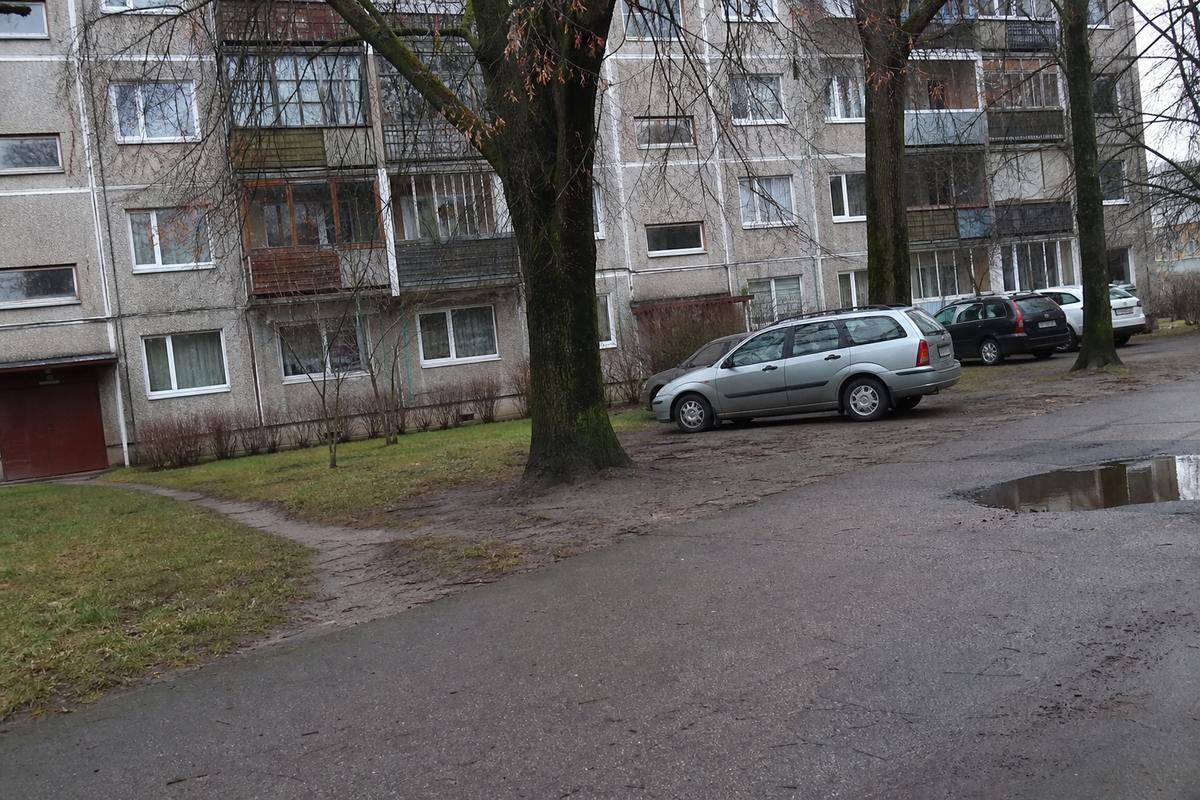
The Zolitūde estate was built as a single scheme, and the planting followed at the same time. Decades on, that means the neighbourhood's trees are one generation of trees — grown up together and having together reached the size at which they start to touch roofs, paths and parking bays.
What a courtyard usually needs
Most enquiries from Zolitūde are not about removing a tree but about something smaller:
- Dead branches over a path or a parking bay. A dead branch breaks unpredictably — this is the most typical and the cheapest courtyard job.
- A crown over the roof or the balconies. The answer is usually reduction on that side, not removal of the whole tree.
- A tree too close to the building. Here we survey it first — it often turns out the tree is healthy and the only problem is the size of the crown.
- Emergency work after a storm. A branch that has torn out but hung up in the crown is an urgent case.
What each of these jobs involves we have described in the crown care section.
Consent and who orders the work
Courtyard land in Zolitūde is most often in shared ownership or owned by the local authority, so an individual resident cannot order the work. The client is the managing agent or the flat owners' association.
The quickest route is this: we survey, prepare a quote and a description of the work, and you submit it to the managing agent. With a concrete document the process moves considerably more smoothly. More on this: tree removal in apartment-block courtyards.
Access and noise
In the inner courtyards of Zolitūde the parking is heavily used and there is often no room for machinery. The standard answer is taking the tree down in sections on ropes, cordoning off the work zone beforehand and agreeing that a few parking bays will be cleared for a couple of hours.
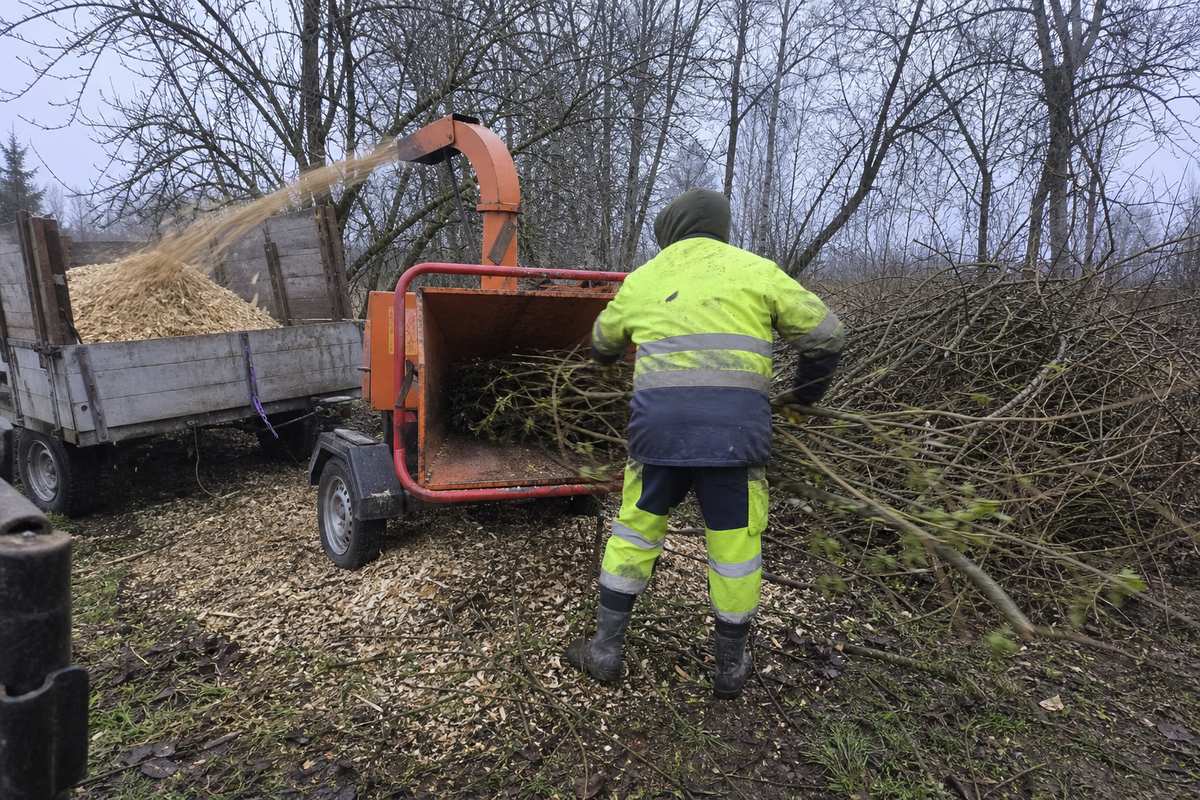
A chipper is loud, so in courtyards we schedule it during the working day rather than early in the morning or late in the evening. When the job is done we take the branches away — we do not leave chip in the courtyard.
Trees in Zolitūde that have grown right up to the wall of the building
Most of the courtyard trees in Zolitūde were planted as the buildings were handed over, and back then they were small whips. Today that same lime or maple stands three metres from a panel wall, and its crown blocks the ground-floor windows all summer. The other reason we hear often is damp — when the crown runs down along the wall and the foliage keeps the wind out, the wall dries more slowly after rain, and greenish bands of growth appear on the north side.
Honestly, felling does not always deliver what people expect of it. Thinning and lifting the crown brings back light and airflow, but the effect lasts a few years and then the work has to be repeated. If the tree stands literally against the foundations and is growing towards the building, repeated pruning for shade is only buying time — then it is more honest to talk about removal and planting a new tree further from the wall. We tell you which of the two applies in your case rather than selling you the more expensive one.
- Pruning for more light — when the crown can still be brought back into order
- Removal between buildings — in tight spaces, in sections, lowered on ropes
- Do roots damage foundations — on when the worry is justified and when it is not
Self-seeded trees along fences, garages and the edges of the blocks
Zolitūde has plenty of edges that belong to no courtyard: the railway margin, the garage blocks, the strips between a car park and a fence, the backs of retail and public buildings. Nothing is planted there — maples, willows, poplars and goat willow seed themselves in. For five years nobody notices them, and then suddenly a branch is lying on a garage roof, a root has pushed out a fence post, or a vehicle can no longer get into the fire access route.
This is the work nobody orders until it gets in the way. Self-seeded trees grow fast and with weak structure — willow and poplar branches break in no more than a moderate wind, and they generally do not break over empty ground. We can clear the whole strip in one go rather than tree by tree: we cut, chip and take it away, and where needed grind out the stumps so that the lot does not regrow from the same roots next year. If the land is in shared ownership or managed by a company, we prepare the quote in a form that can be put on the manager's desk.
If self-seeded trees are already reaching over a power line or leaning dangerously, this is no longer planned work but an emergency — in those cases we come out the same day. Approximate cost ranges can be found on the prices page.
What we do in Zolitūde
Every one of our services is available in Zolitūde. The ones most often requested in this neighbourhood:
- Dangerous tree removal — Dead, rotten, leaning and damaged trees. We assess first, then we cut.
- Emergency tree removal — Fallen and broken trees after a storm — we come out the same day.
- Tree crown care — Crown shaping, thinning and deadwood removal.
- Stump grinding — Stump grinding without digging — the lawn is left almost untouched.
- Tree health assessment — Is the tree dangerous? We survey it and tell you what to do.
- Branch and timber removal — Branch and timber removal, even if someone else did the cutting.
The full list with descriptions is in the services section.
How the work happens
- We get back to you within 5 min. Fill in the form and attach photos showing the whole tree, its base and the route up to it. That is often enough for a ballpark quote.
- Assessment. We reply with an approximate price and a method. If access in Zolitūde is awkward, we come out and look before the job.
- Permit, if one is needed. We check whether this particular tree in Rīga requires one, and we file it on your behalf.
- The work. We agree a time, cordon off the work zone and arrive with everything needed.
- Clearing up. We chip or collect the branches and take them away. We do not leave wood chip behind. If you want firewood, we cut it to length and stack it where you tell us.
What the price depends on in Zolitūde
There is no flat rate per tree. In Zolitūde the price is set by the tree's height and girth, its species and condition, the distance to the wall of the building and the balconies, the absence of a drop zone in the courtyard, the rope work and carrying the material out.
In Zolitūde the price is affected by the distance from the tree to somewhere the chipper and trailer can stand — several trees done in one courtyard cost less per tree. We have set out the full list with explanations on the prices page.