
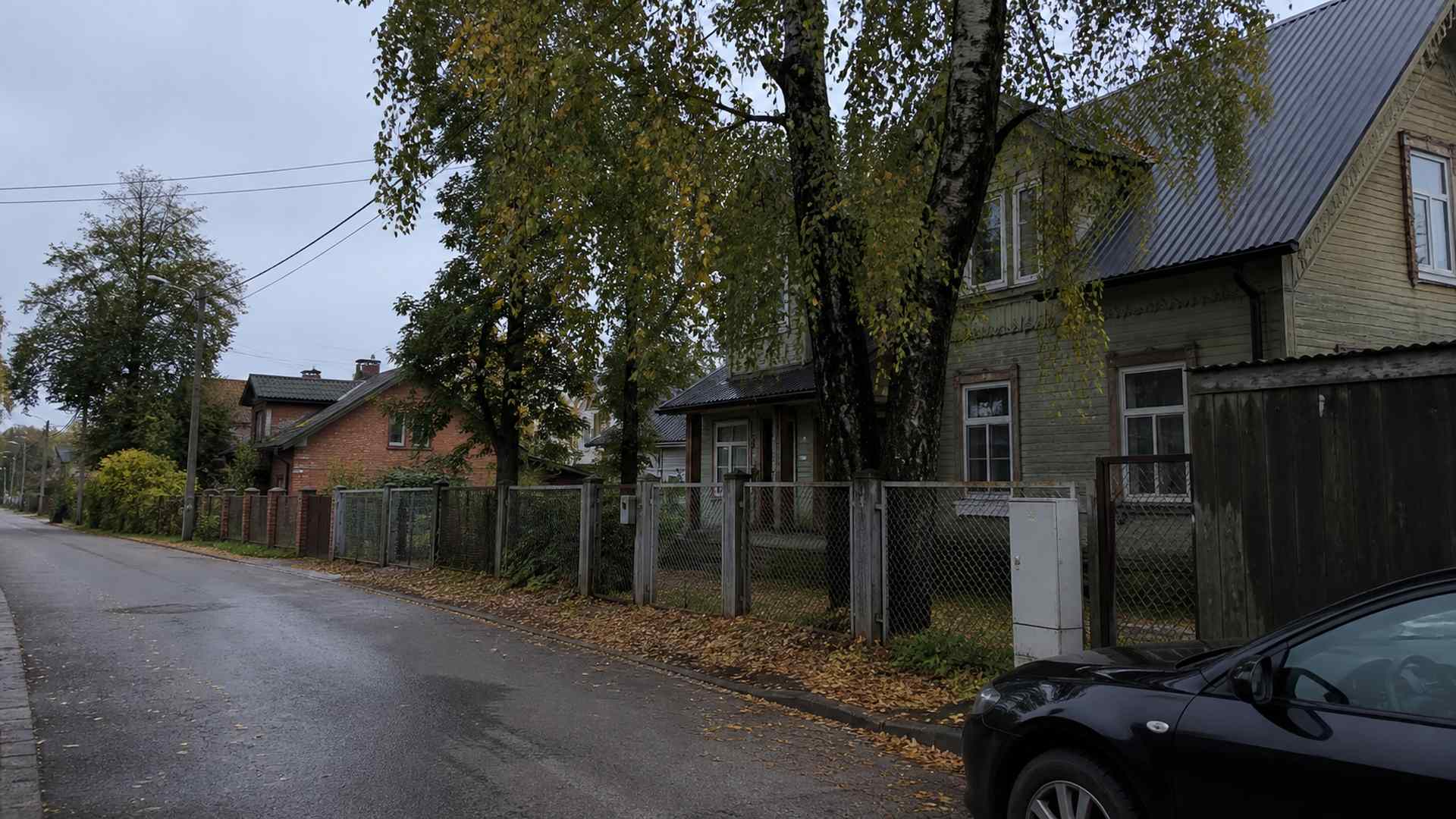
Jelgava is a compact state city on the Zemgale plain, divided by the Lielupe and the Driksa. The built fabric is many-layered: a historic centre, Soviet-era apartment districts, areas of detached houses, the university and production sites. Each of those layers brings its own tree work.
A plain means wind
On the Zemgale plain there is no natural shelter from the wind. Trees standing alone in the fields, along roads and on the edges of the city take the full wind load, and after storms it is here that we see trees thrown over with the whole root plate — especially in a wet period, when the ground holds less well.
Inside the city the situation is the reverse: the trees have grown sheltered between buildings, and when a neighbouring building is demolished or a group of trees thinned, the remaining tree is suddenly exposed. Those are exactly the trees at risk in the next storm.
The Lielupe and Driksa floodplains
The Lielupe and the Driksa divide the space of the city, and in the floodplain zones the soil is wet or seasonally saturated. The willows, aspens, black alders and birches growing there grow fast but are brittle, and their roots hold less firmly than they appear to.
For our planning that means heavy machinery does not go onto such sites in spring or after prolonged rain. Either we work with ropes and carry the material out, or we plan the work for a drier period or frozen ground.
Apartment districts and street trees
In the apartment districts of Jelgava the trees were planted as the buildings went up and have now reached full size. The commonest enquiries: branches over the parking area and the path, dead tops, poplars at the gable end.
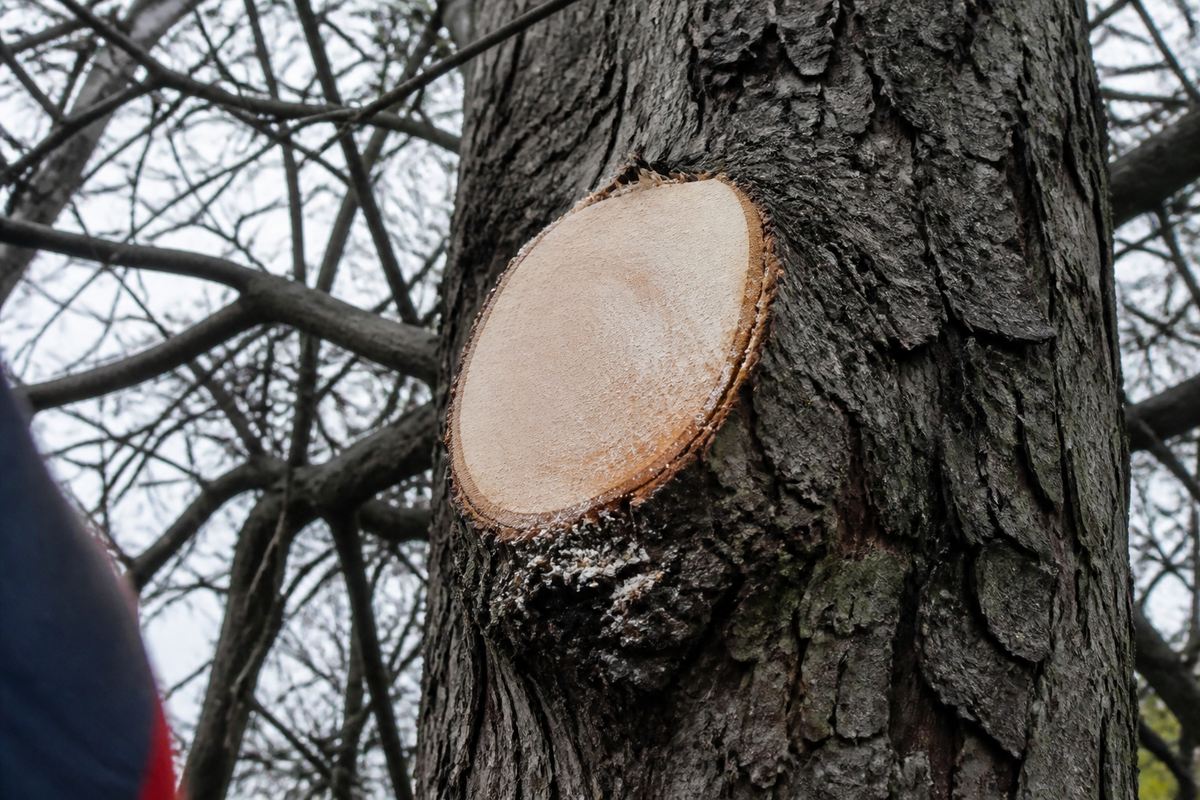
In this work what matters most is not the saw but where the cut is made. A badly cut branch never closes over, and the tree answers with a dense mass of vertical shoots that after a few years is more dangerous than the original problem. How we do it properly: tree crown care.
Business and institutional grounds
Jelgava has manufacturing companies, the university and institutional grounds where tree care means an area: avenues, car park planting, rows of trees along fences and access roads.
For clients like these we start with a survey and a list of problem trees, graded by urgency. It can then be tackled in stages or under a regular maintenance contract. More: commercial tree care.
Spring floods and tree roots in Jelgava
Spring floods are no rarity in Jelgava, and in many districts water stands around the trees for days or weeks. Tree roots need oxygen, and in flooded, compacted soil they do not get enough. The consequences are usually not seen at once — they appear in summer or the following season, when part of the crown starts to die back, the leaves are smaller than usual, and the tree colours early.
Once the water has run off, we recommend looking over the trees for a few specific signs:
- whether layers of washed-up silt and debris have collected at the base of the trunk, smothering the root collar;
- whether the tree has changed its lean — even a small new change in angle means the roots have moved in the sodden soil;
- whether cracks have appeared in the soil around the tree, or a "cushion" of turf has lifted on the side away from the wind;
- whether bracket fungi are appearing at the base of the trunk and on the root buttresses — damp wakes them quickly.
If a tree has moved or more than a quarter of the crown is dying back, we look at it on site and tell you honestly whether a health assessment and relieving the crown will do, or whether the tree has already lost its footing and it is safer to fell it.
Jelgava's old parks, avenues and limes
Jelgava has many mature limes, oaks and horse chestnuts — in the parks, in avenue rows and beside the old buildings near the centre. These trees are often older than the fences and parking areas built around them, and that is precisely why there is no need to rush to cut them. A large old tree cannot be replaced in a day: new planting needs decades to give the same shade and hold as much water.
An old tree does, however, call for a different approach from a young one. Our work on such trees is usually measured and gradual — deadwood removal, shortening individual heavy, overloaded branches and relieving the edge of the crown so that the tree does not lose its form. On chestnuts and limes with cavities we assess how much sound wood is left in the trunk wall and whether the crack is active.
What we do not recommend: taking the whole crown back to stubs and hoping the tree will recover. After a cut like that an old tree pushes out weak, poorly attached shoots, and after a few years it is more dangerous than it was before. If the tree may be a heritage or protected tree, we say so at once and arrange the necessary approval from the local authority for you.
What we do in Jelgava
In Jelgava we offer our full range of services — from a single dangerous tree to clearing an entire site. The most frequently requested:
- Dangerous tree removal — Dead, rotten, leaning and damaged trees. We assess first, then cut.
- Emergency tree removal — Fallen and broken trees after a storm — we come out the same day.
- Tree crown care — Crown shaping, thinning and deadwood removal.
- Stump grinding — Stump grinding without digging — the lawn stays almost untouched.
- Tree health assessment — Is the tree dangerous? We survey it and tell you what to do.
- Branch and timber removal — Removal of branches and timber, including where someone else did the cutting.
The full list with descriptions is in the services section.
How the work happens
- We get back to you within 5 minutes. Fill in the form and attach photos showing the tree at full height, its base and its surroundings. That is often enough for a rough quote.
- Assessment. We reply with an approximate price and method. In more complicated cases we come out to Jelgava to look before the work.
- A permit, if one is needed. We check whether the Jelgava local authority requires one for that particular tree, and we handle the paperwork for you.
- The work. We agree a time, arrive with everything needed and cordon off the working area.
- Clearing up. We chip or collect the branches and take them away. We don't leave wood chip in the garden. If you want the firewood, we cut it to length and stack it where you ask.
What the price depends on in Jelgava
There is no flat rate per tree. In Jelgava the quote is made up of the height and girth of the tree, its species and condition, the distance to buildings and cables, whether there is a clear drop zone, whether climbing or machinery is needed, the access conditions and the volume of material to be taken away.
In Jelgava the price includes the journey from Rīga, so larger jobs and combining several sites in one visit work out better here than one small job on its own. We have set out the full list with explanations on the prices page.